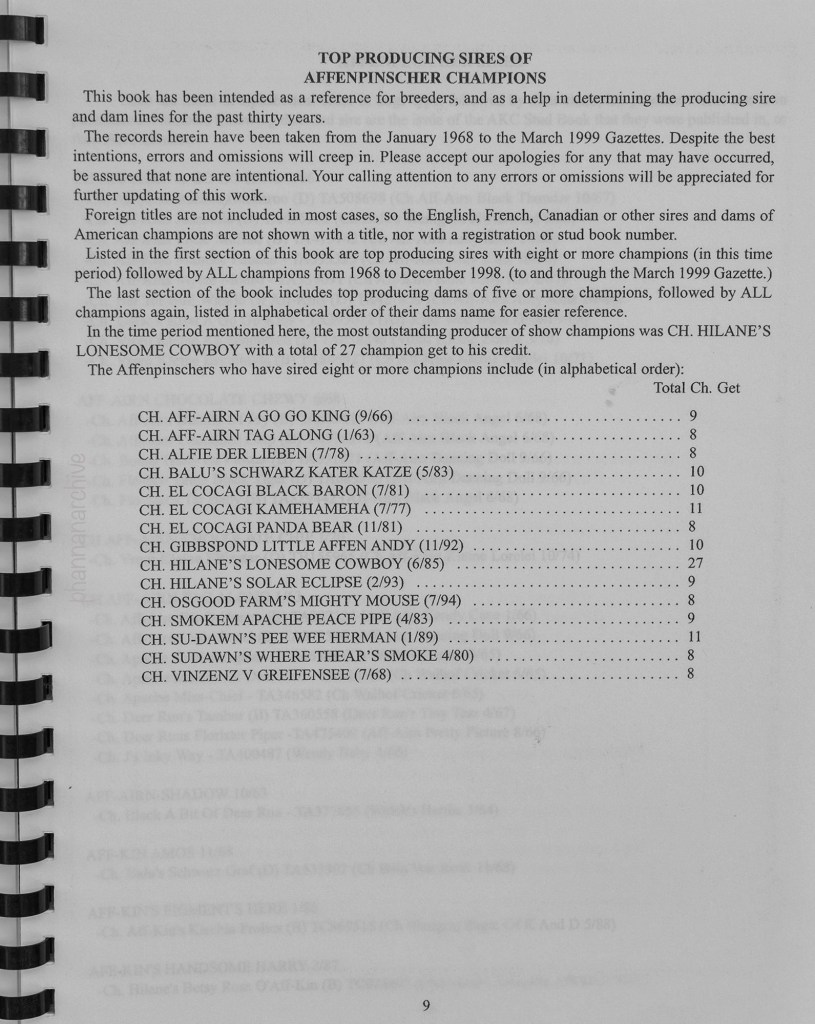
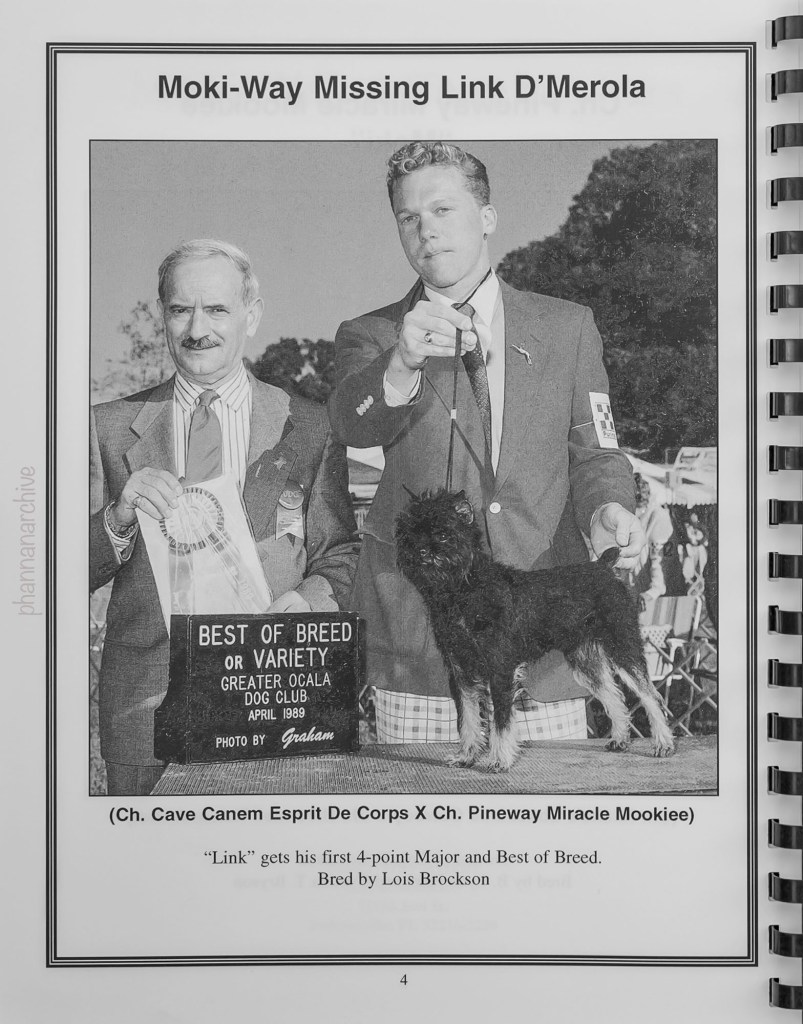
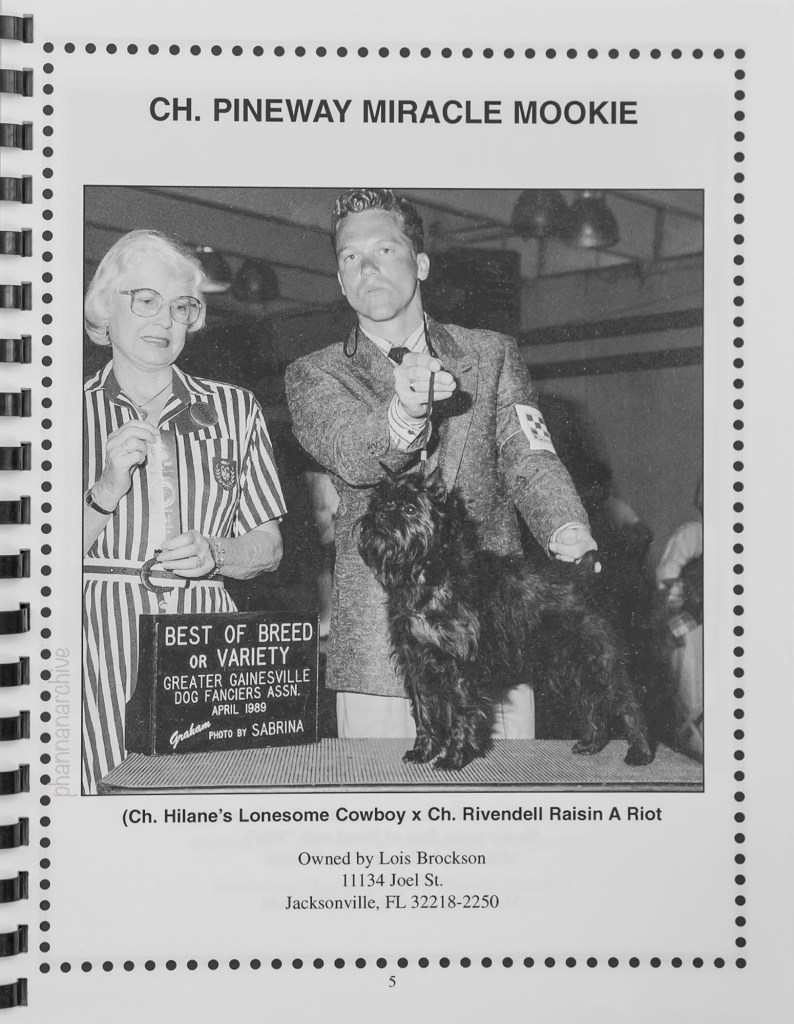
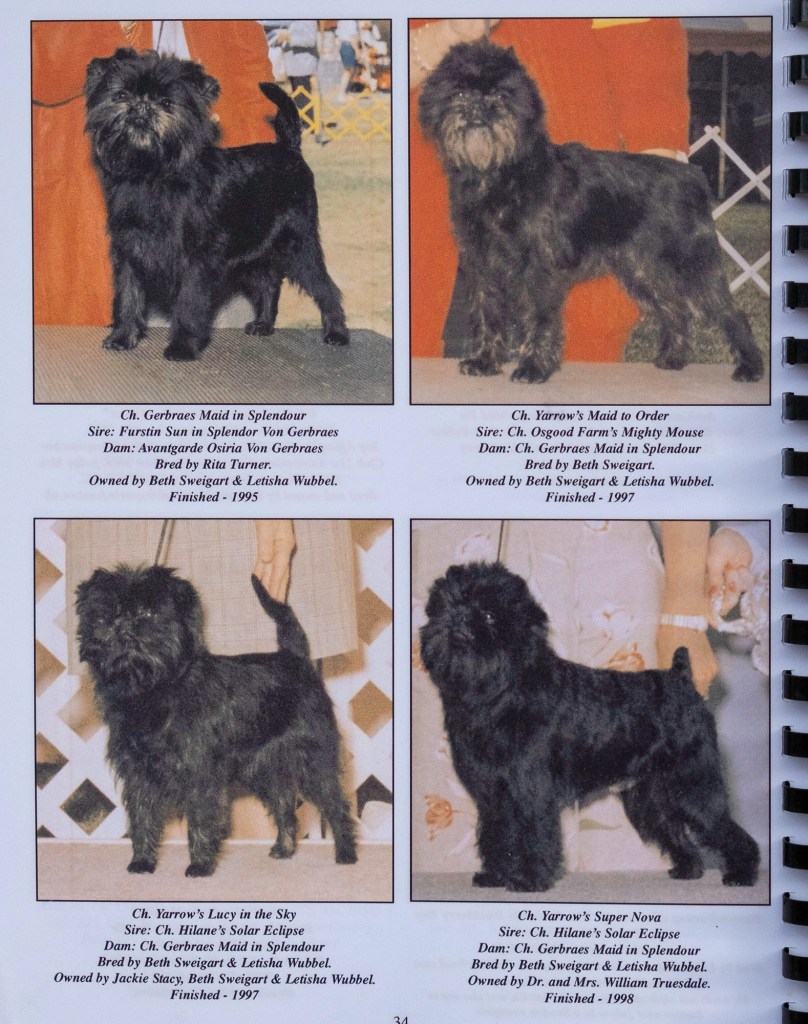
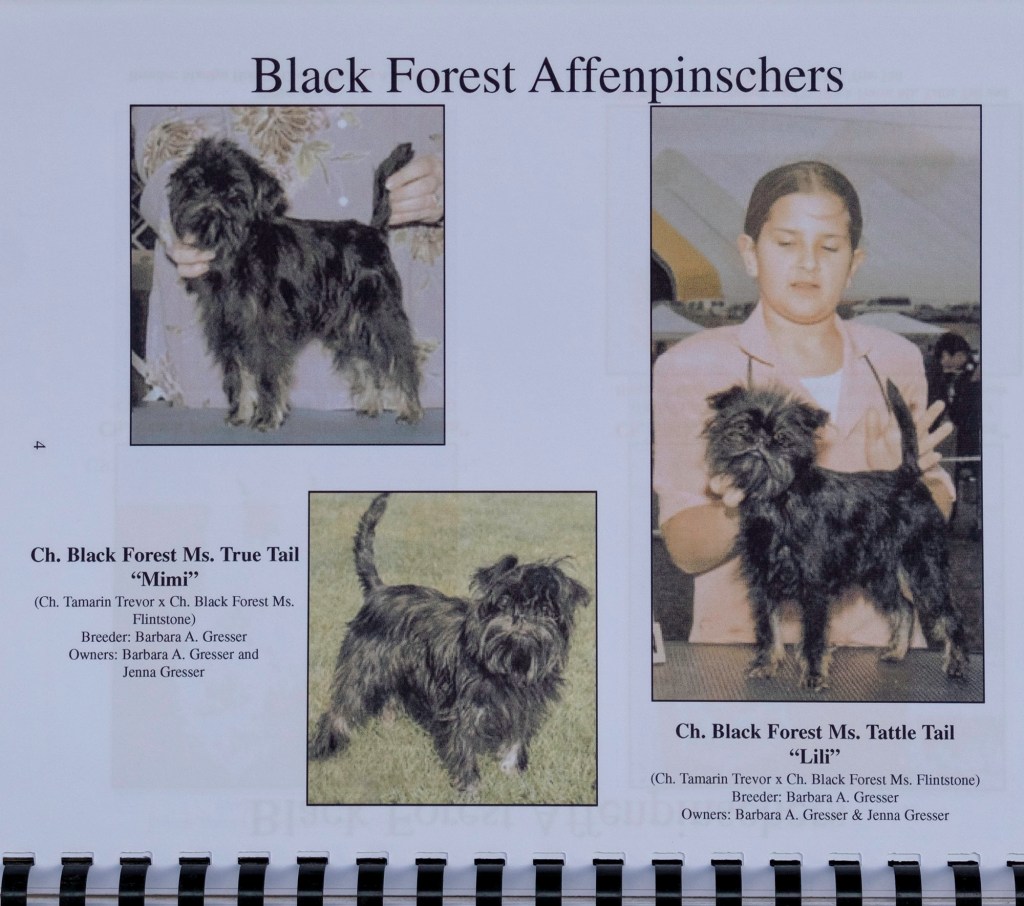
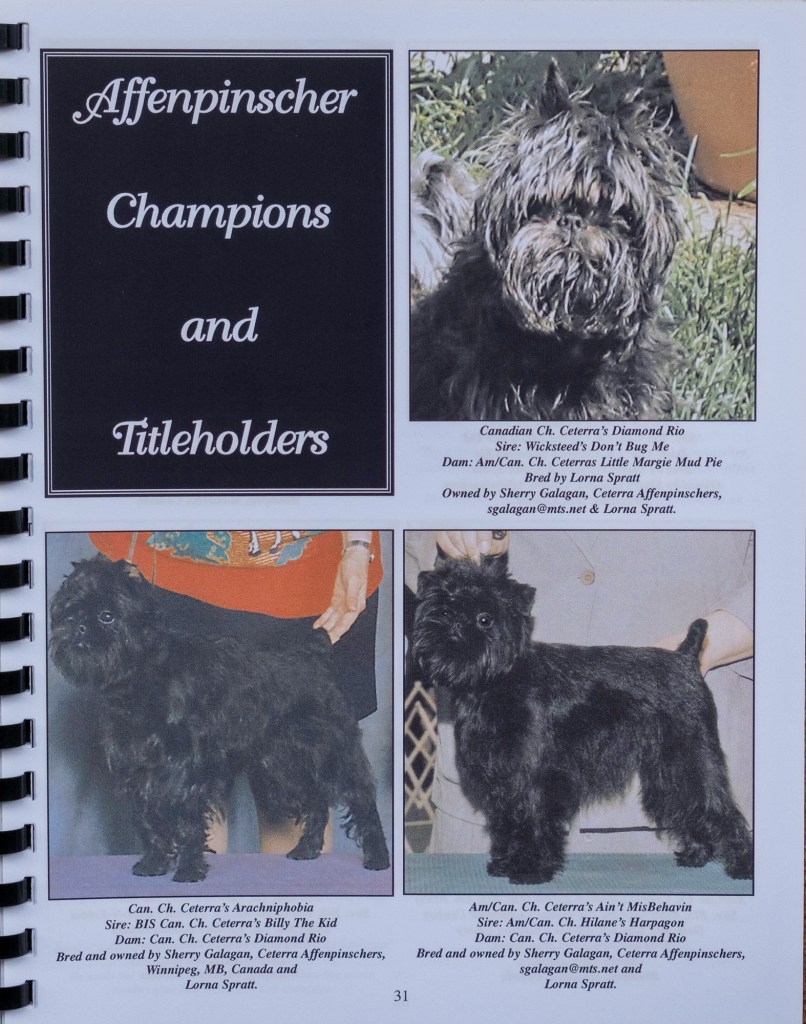
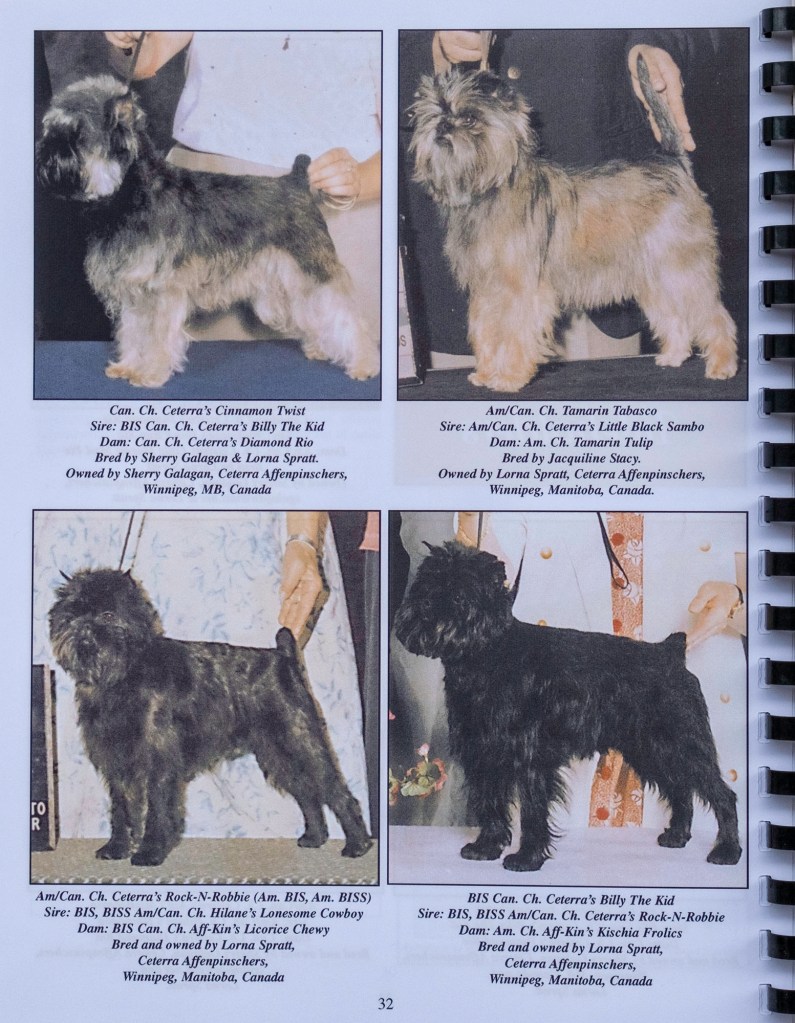
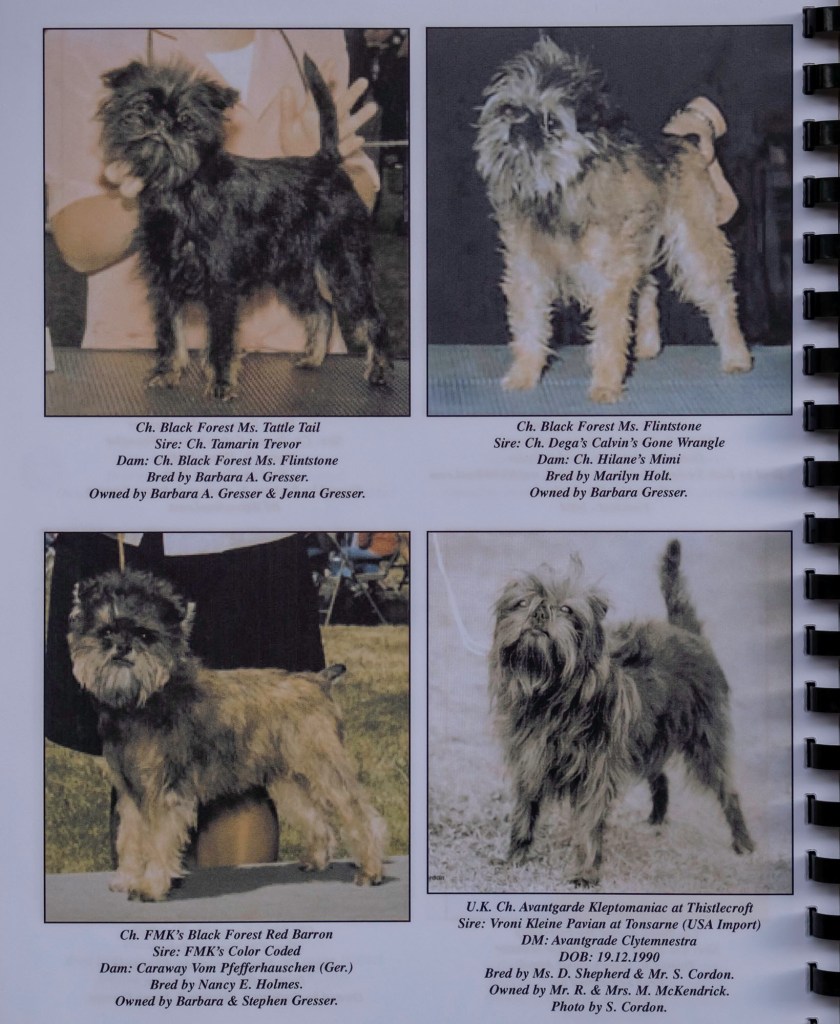
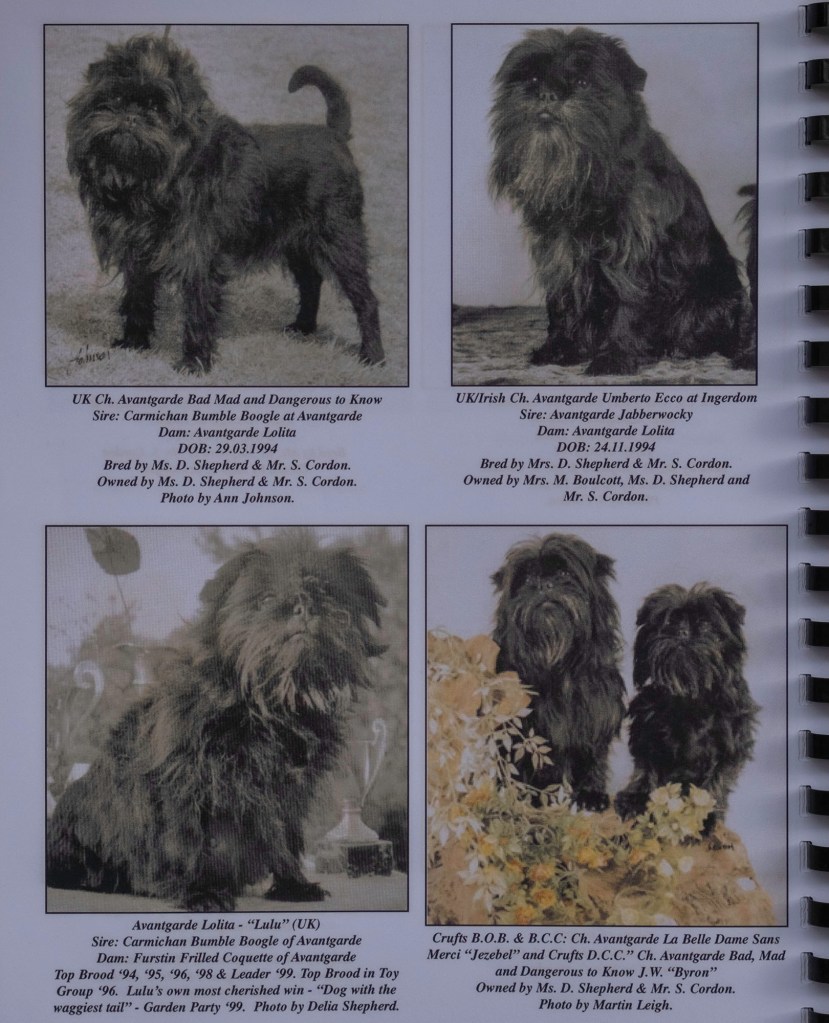
Affenpinscher Champions 1968 – 1998
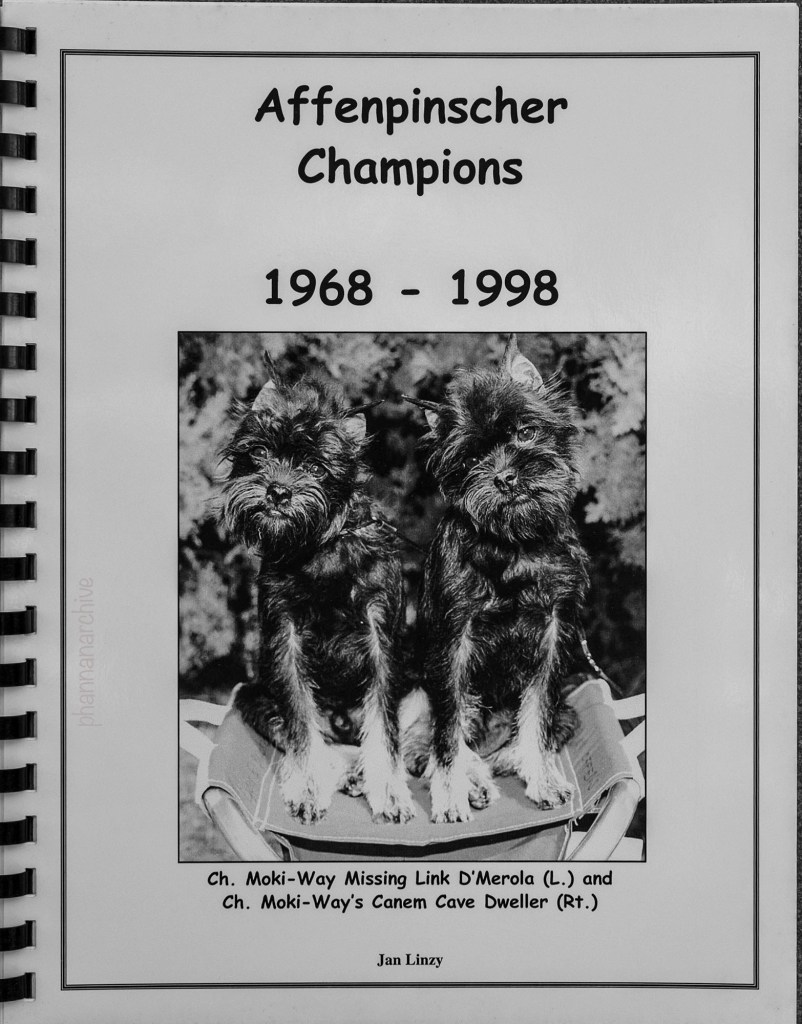
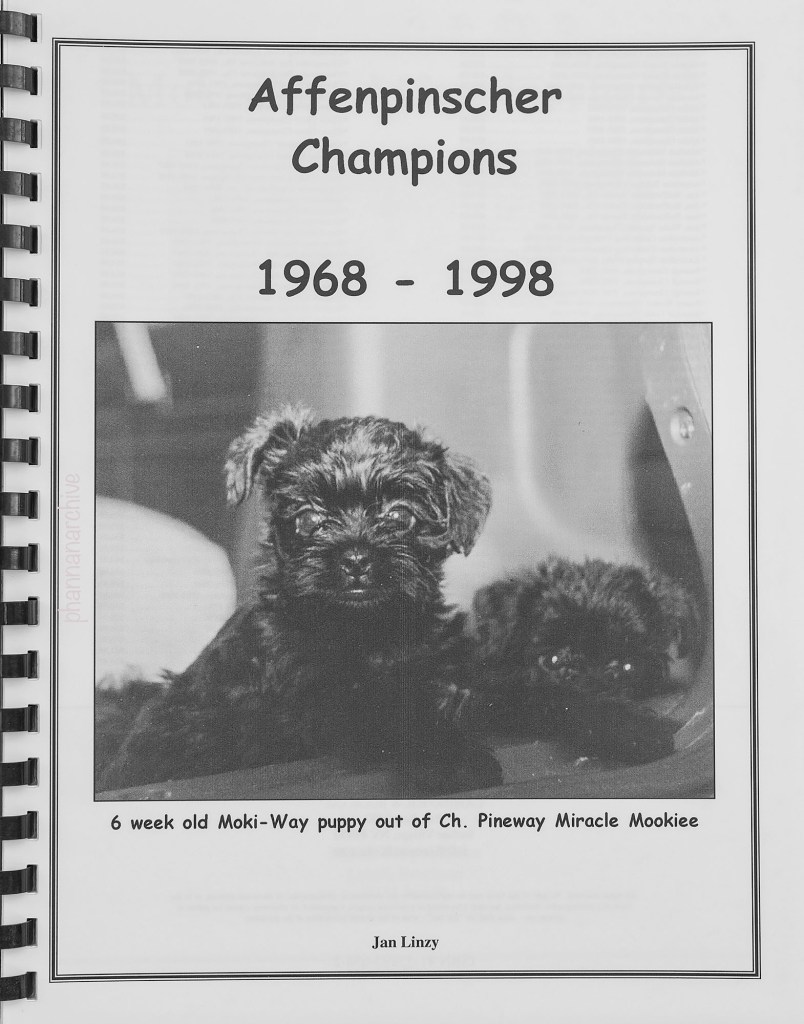
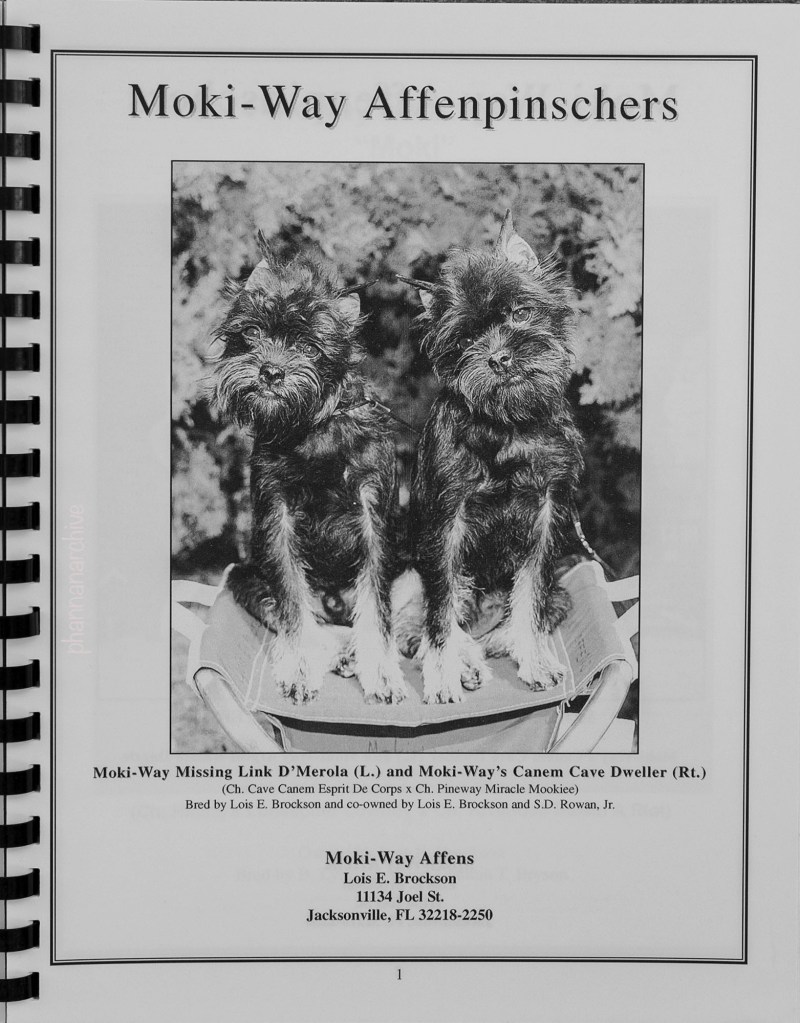
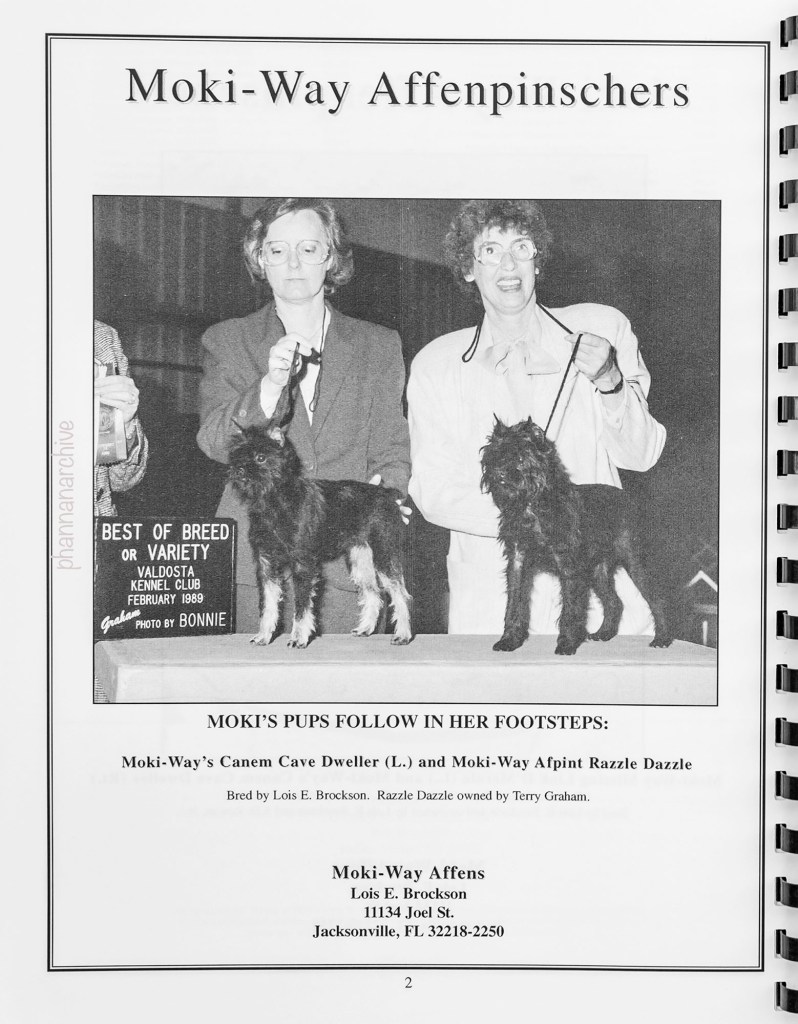
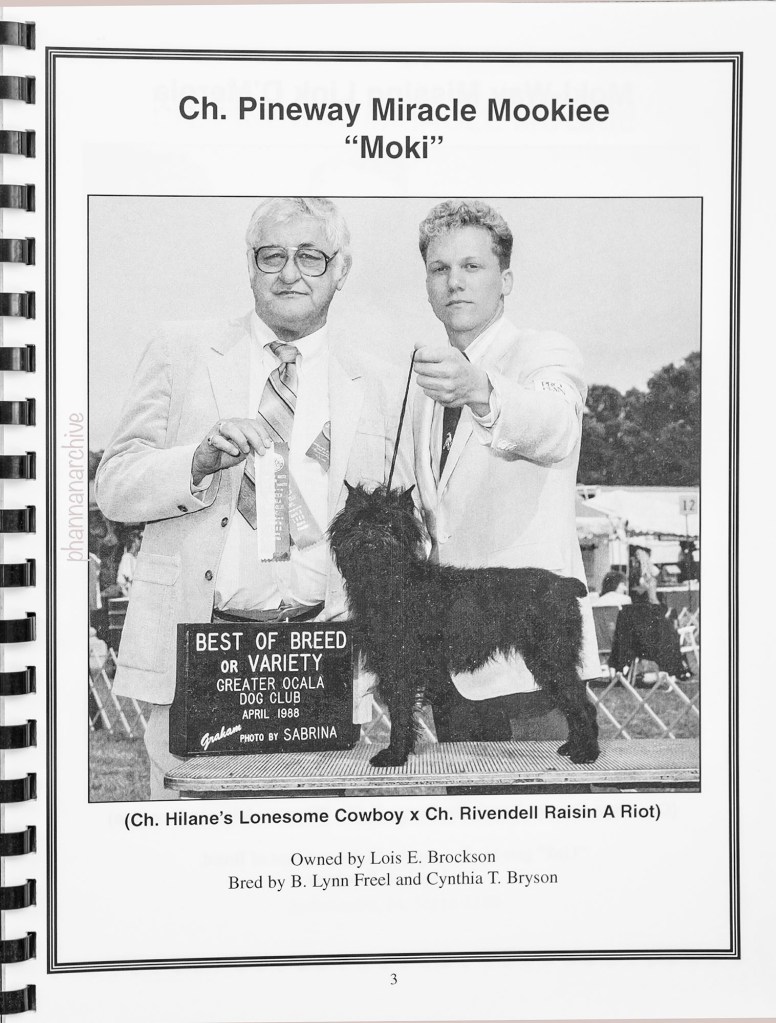
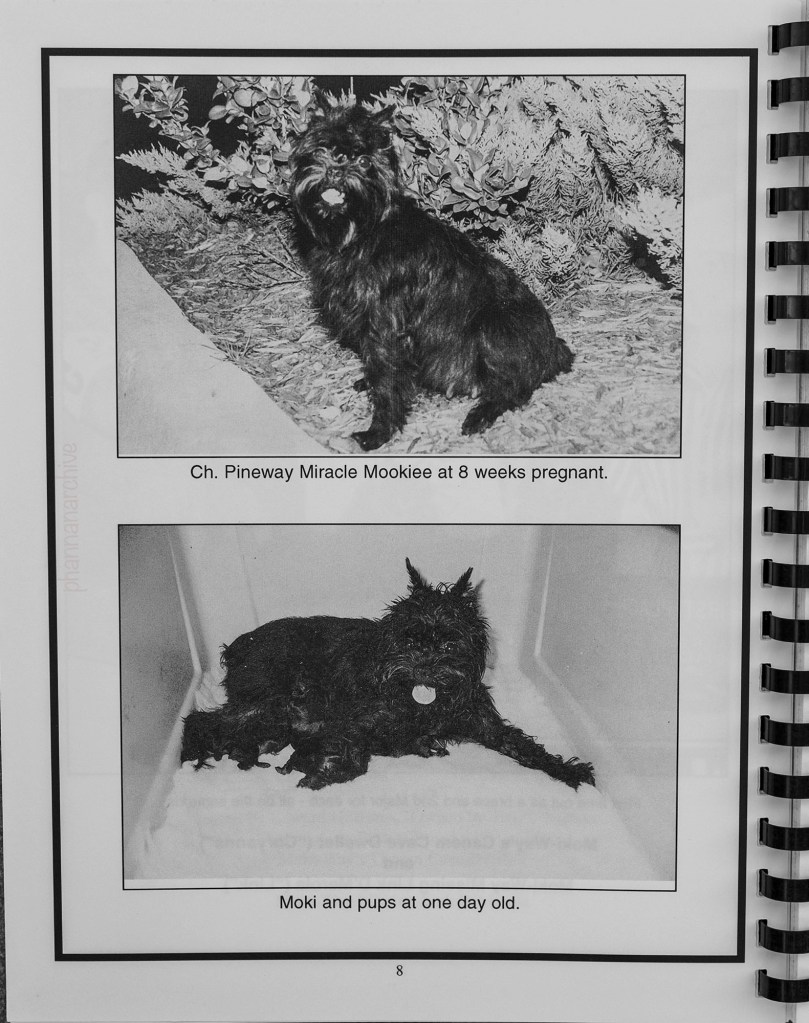
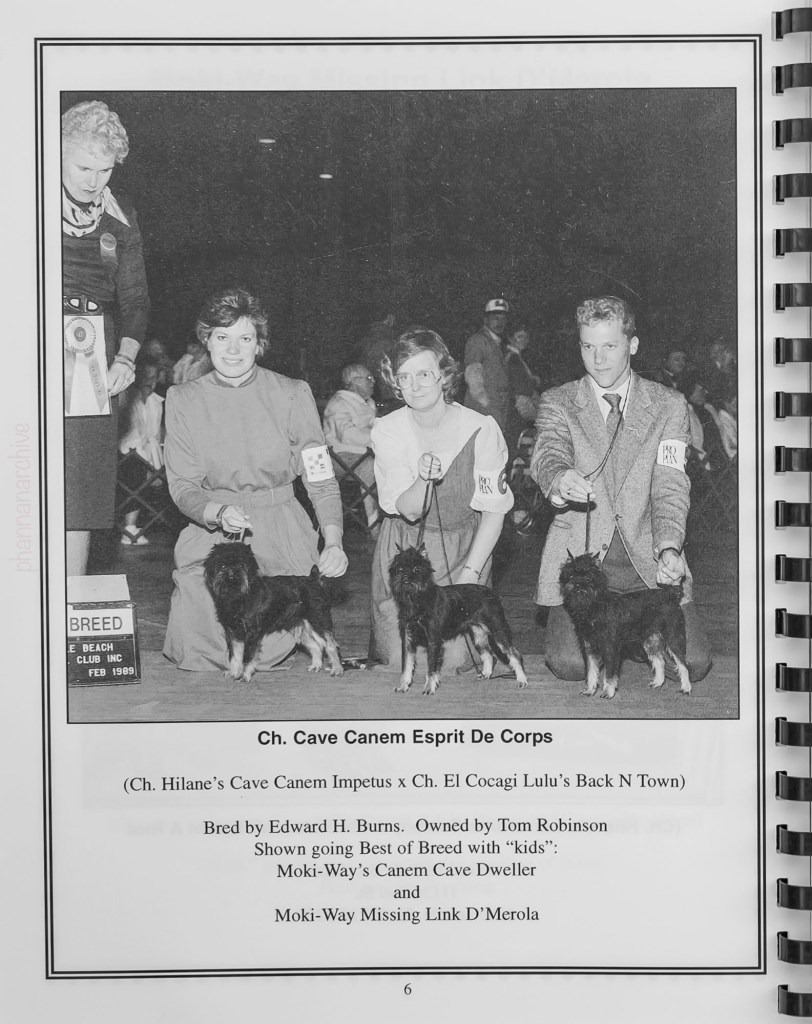
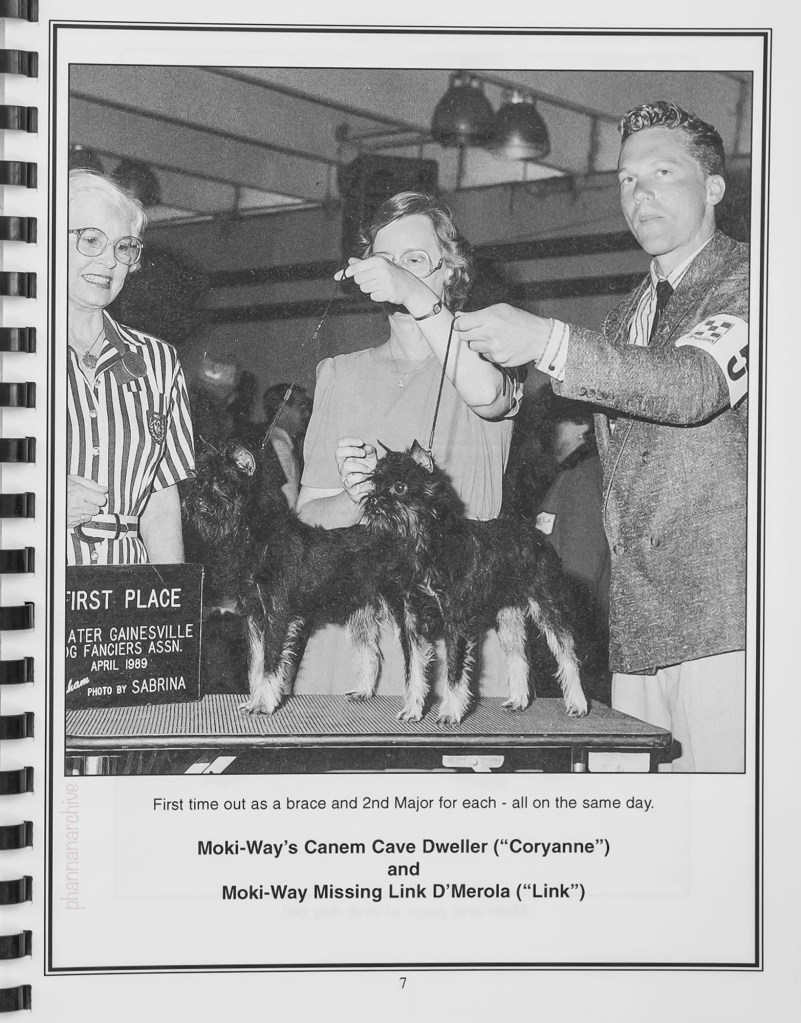
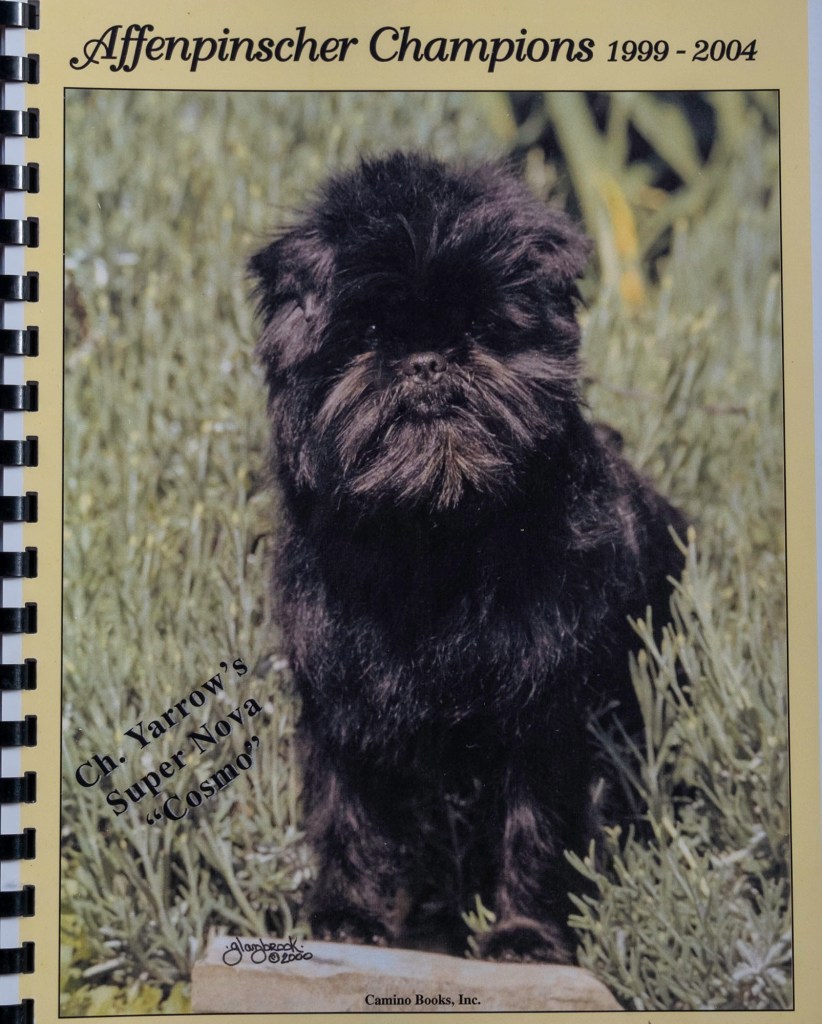
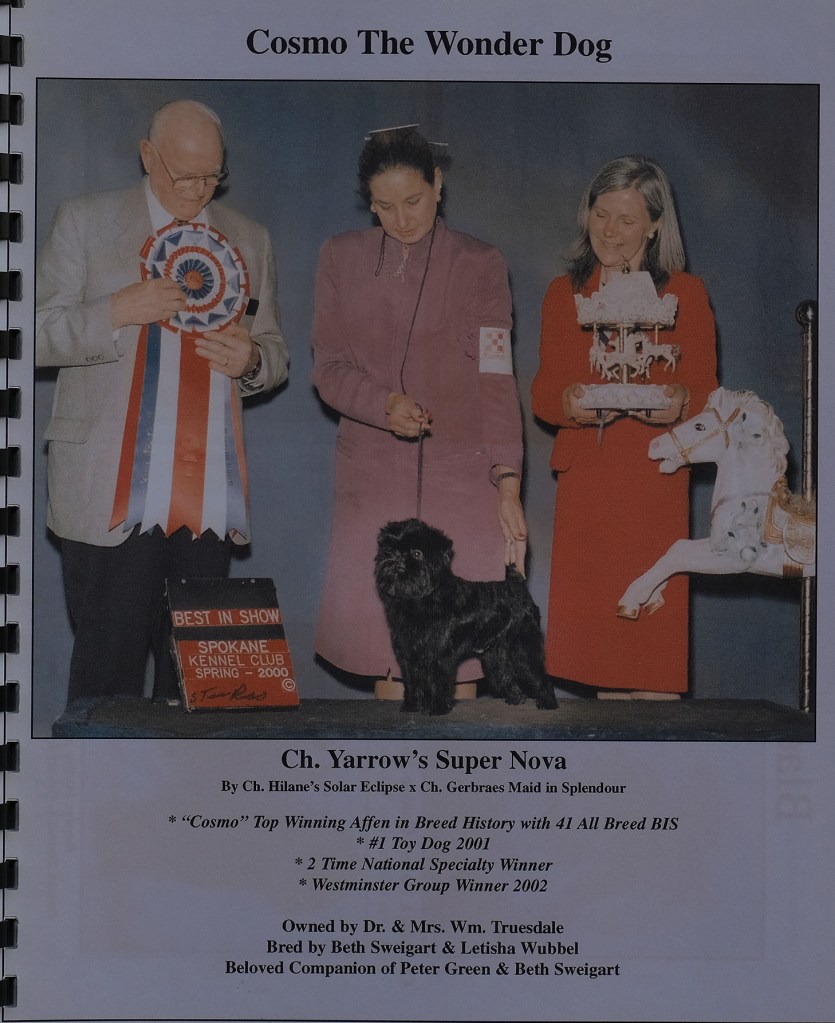
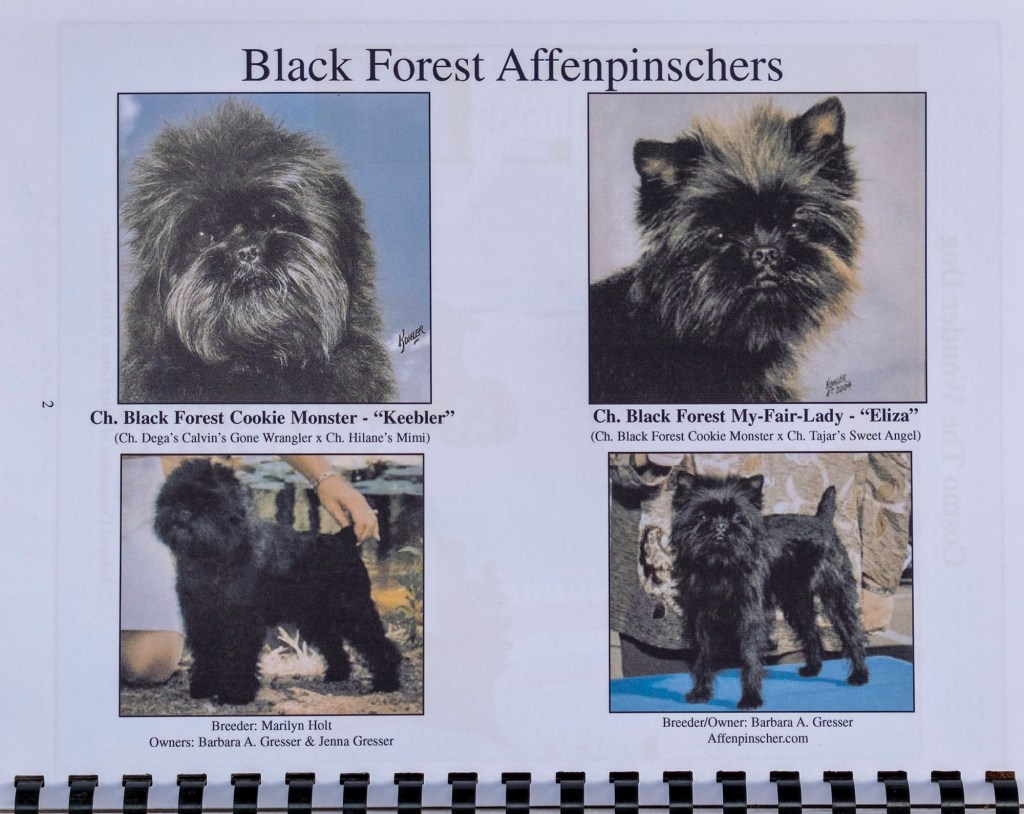
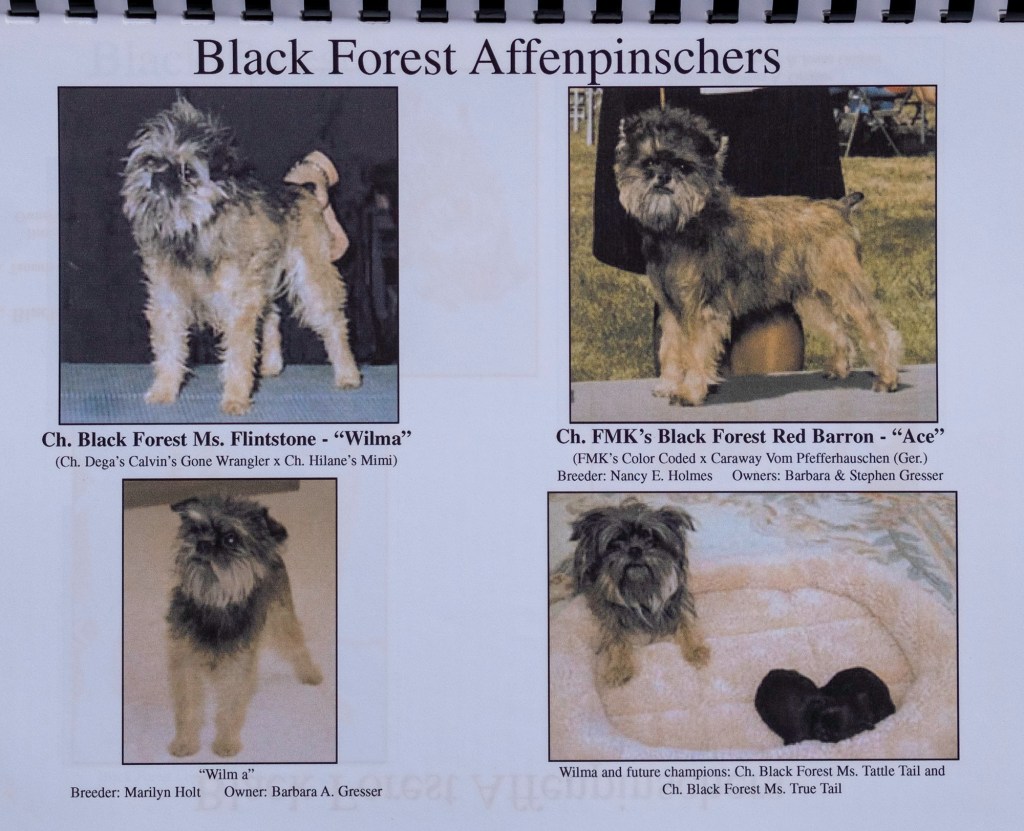
Affenpinscher Champions 1999 – 2004


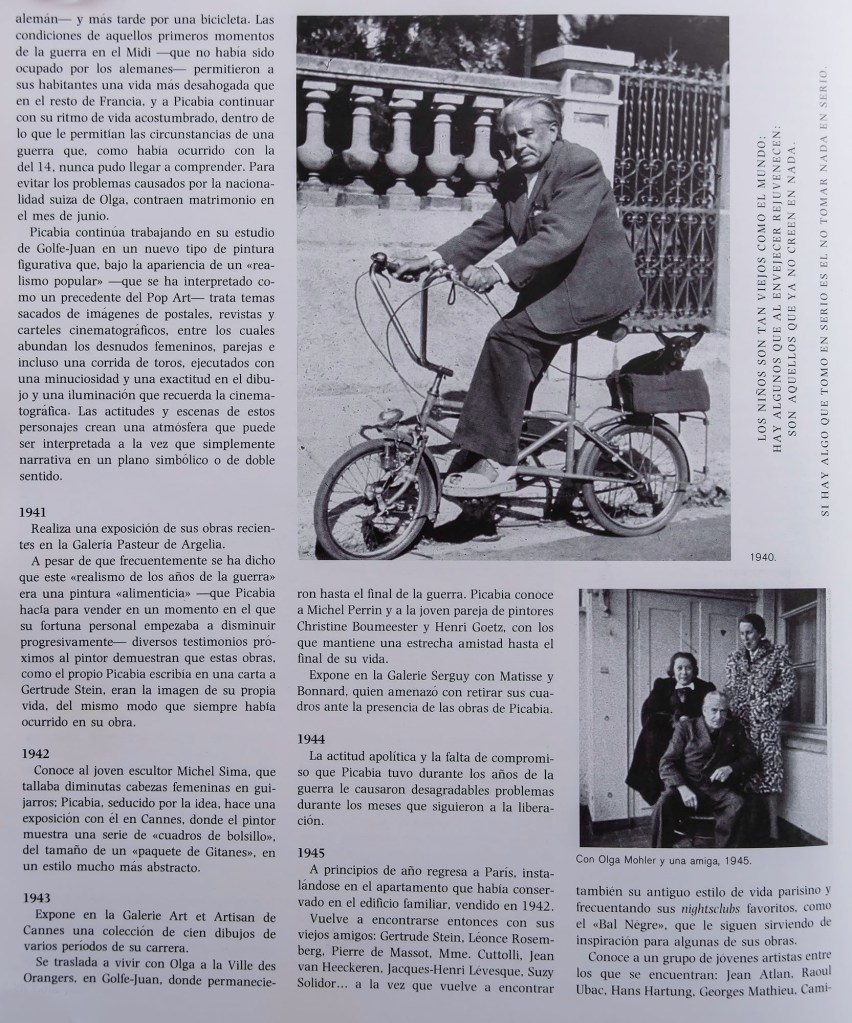
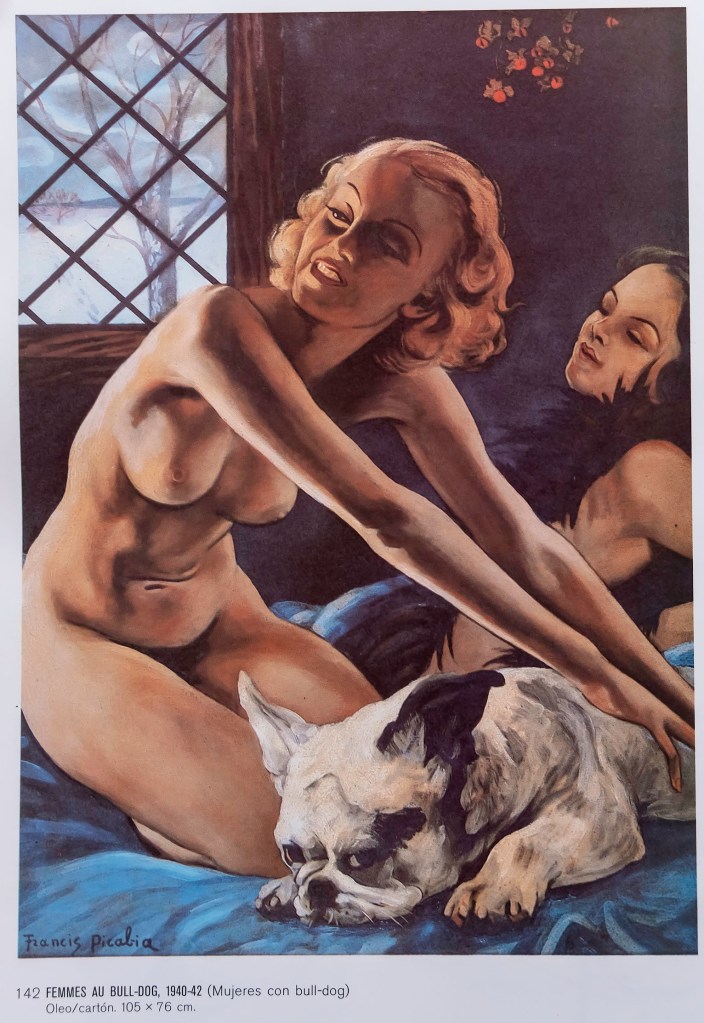
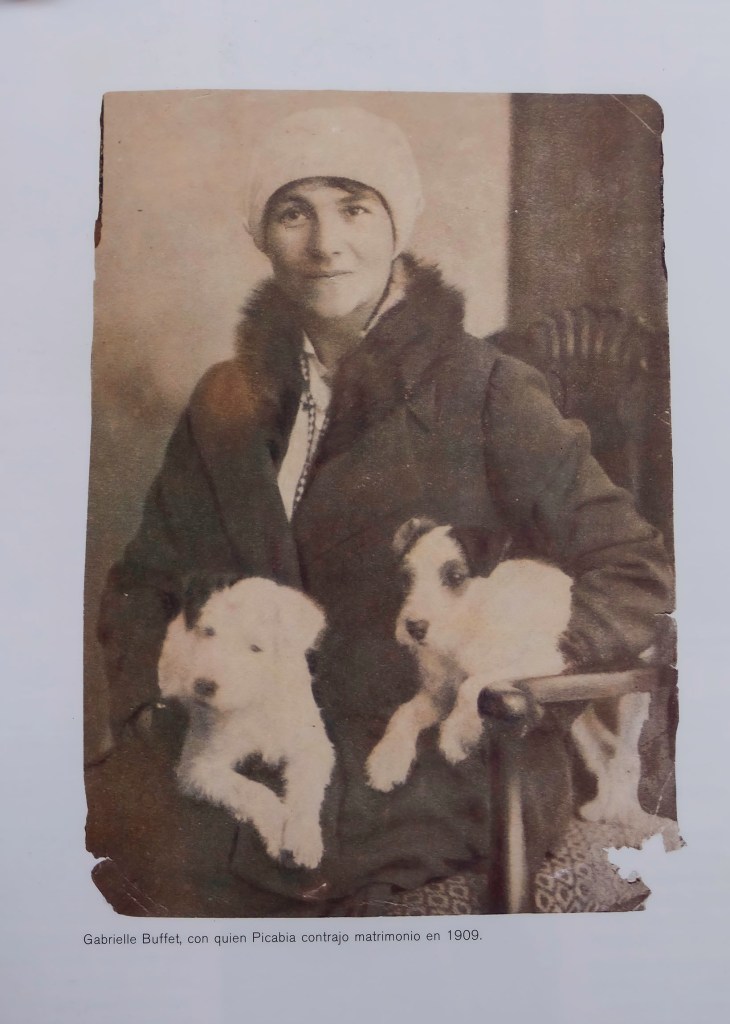
Dorothy Parker, Faulkner and Muñoz Molina
Francis-Marie Martínez Picabia. Francia 1879/1953

The Terriers. 1949
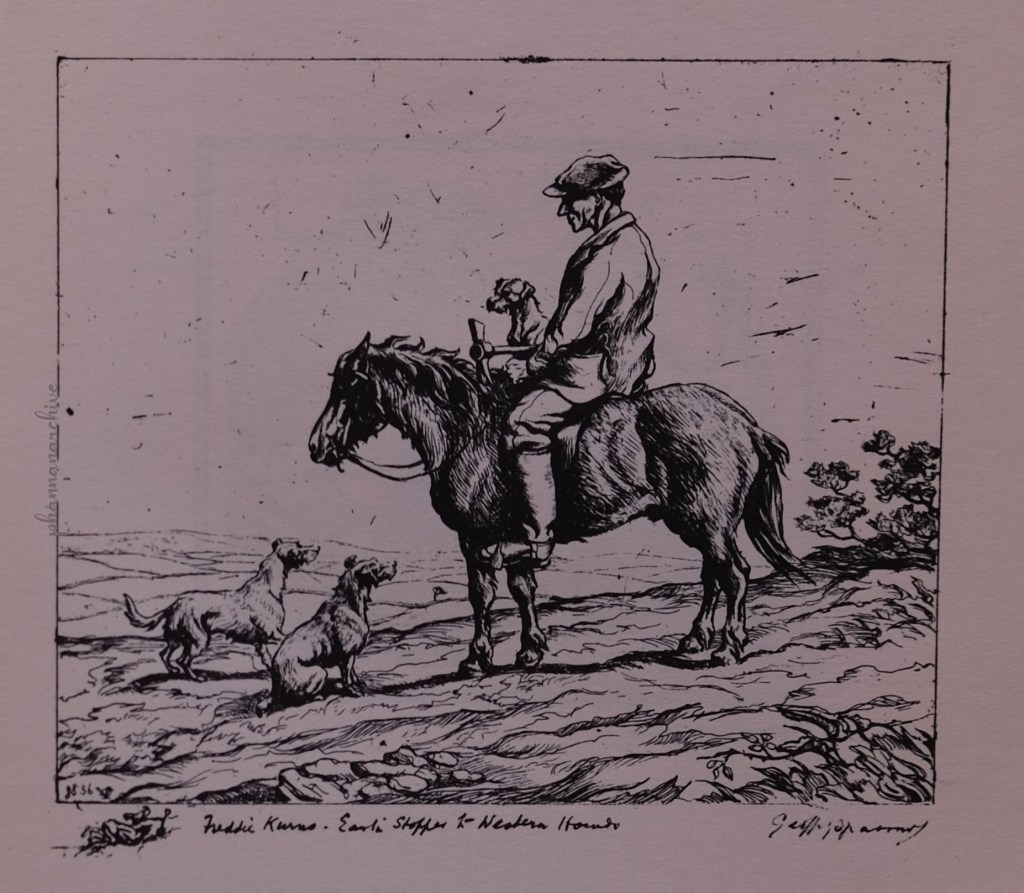


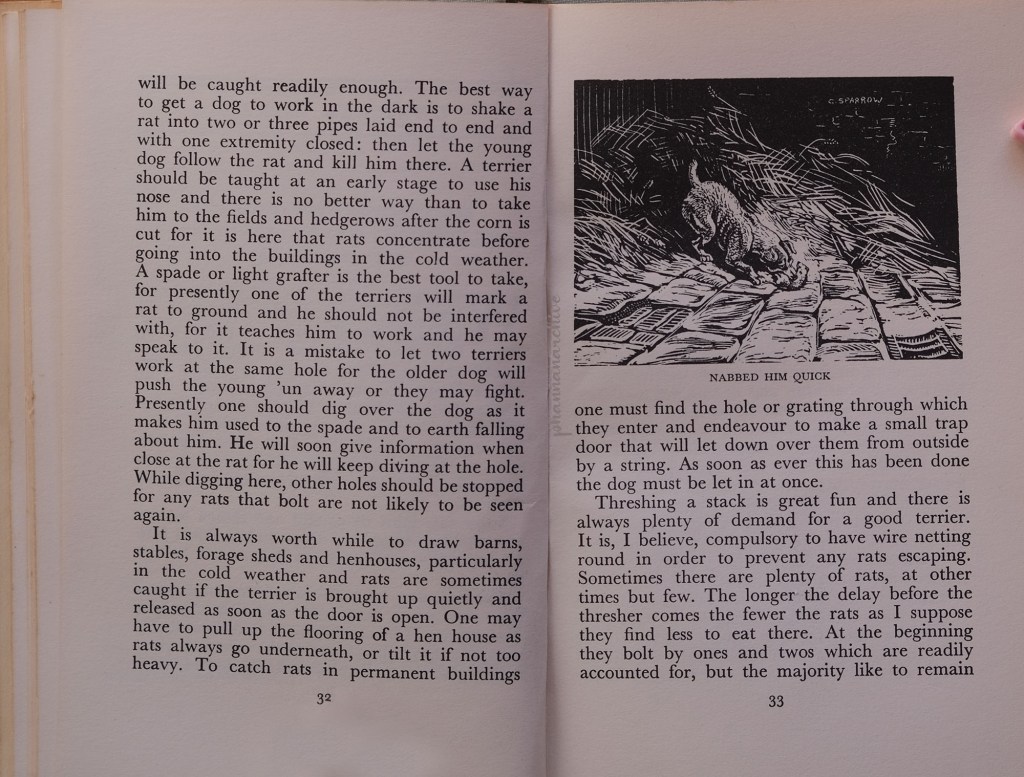
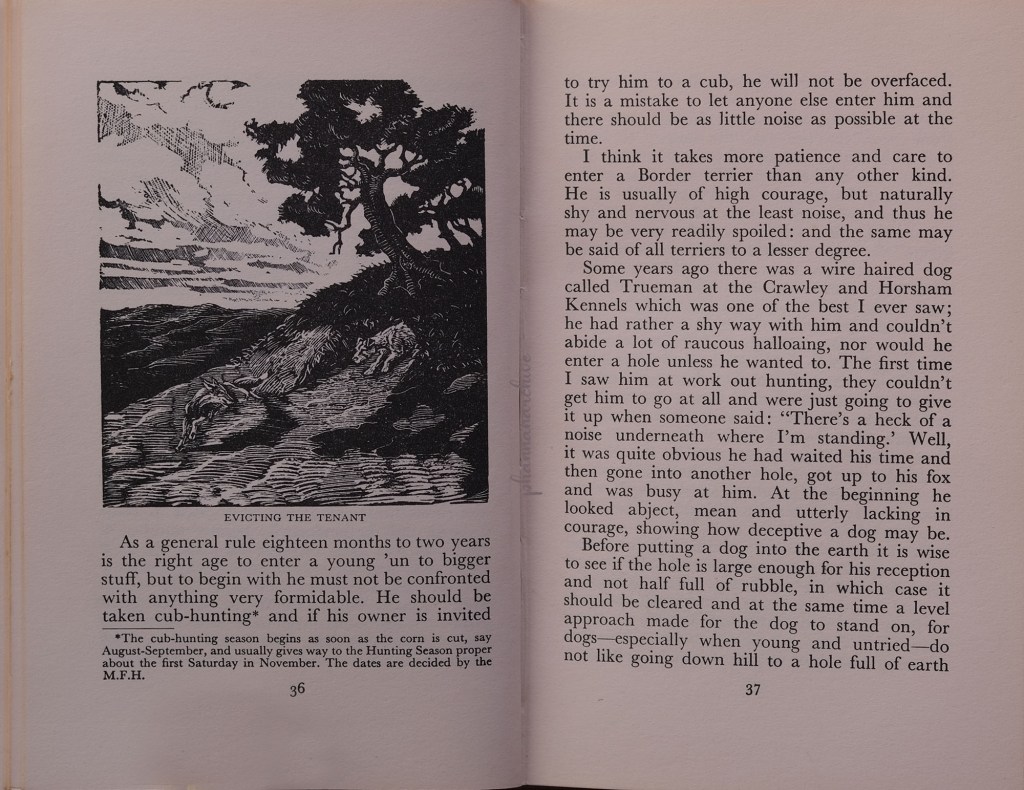
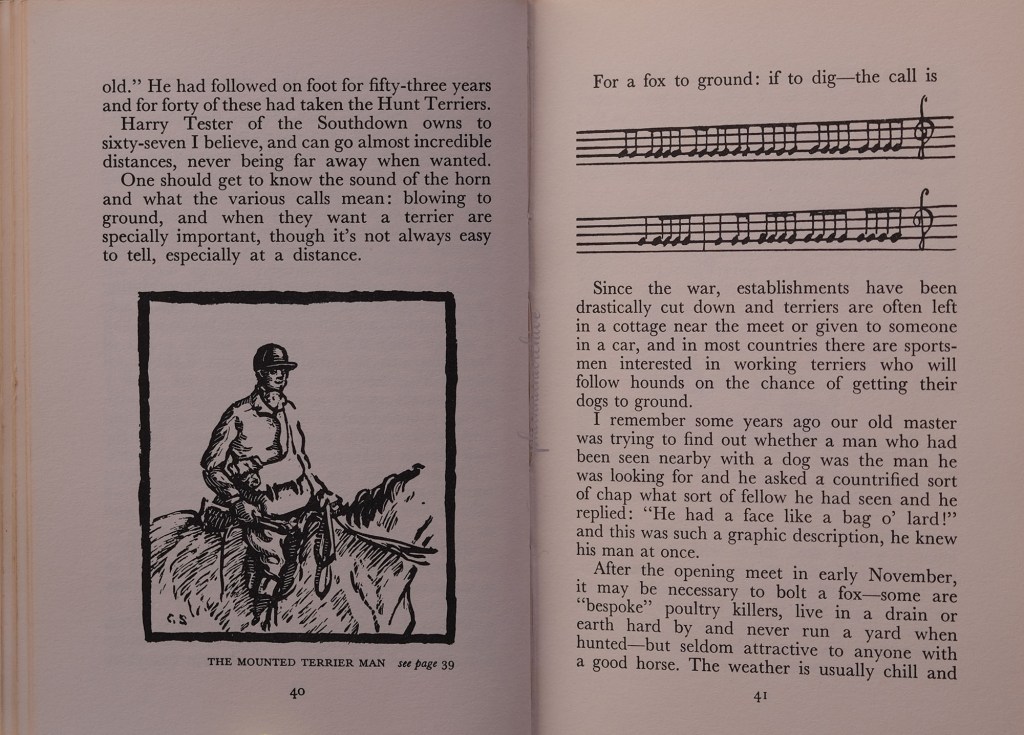
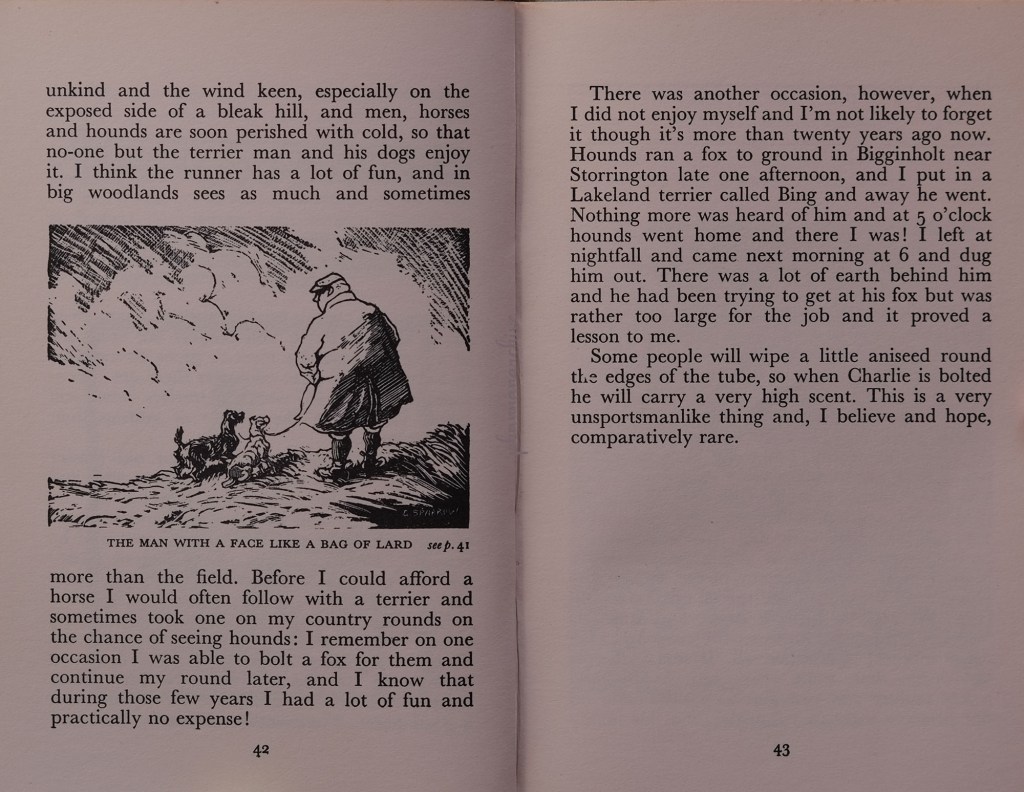


Taken from The Terrierr’s Vocation by Geoffrey Sparrow. UK, 1949
Griffon by Corot. 1929

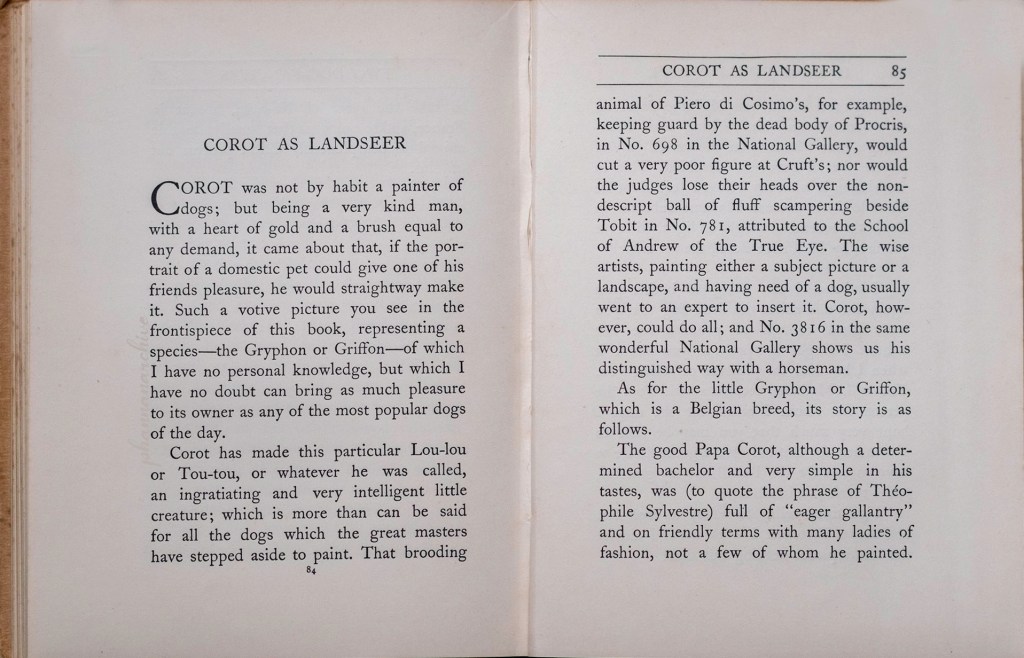
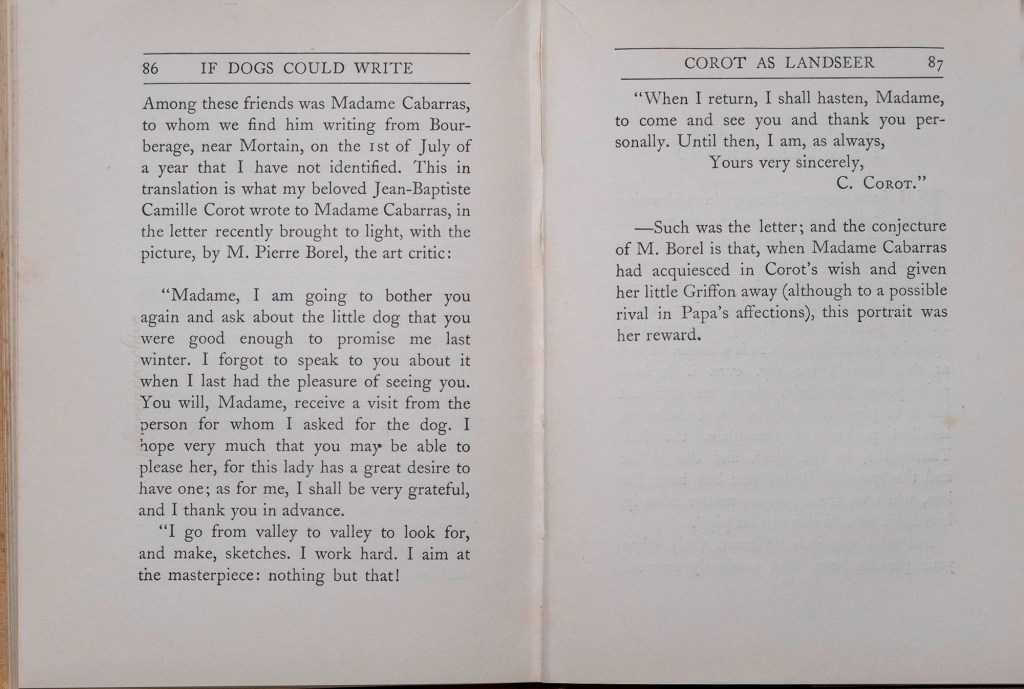
Taken from “If Dogs Could Write” by E.V. Lucas. UK 1929
The Affenpinscher
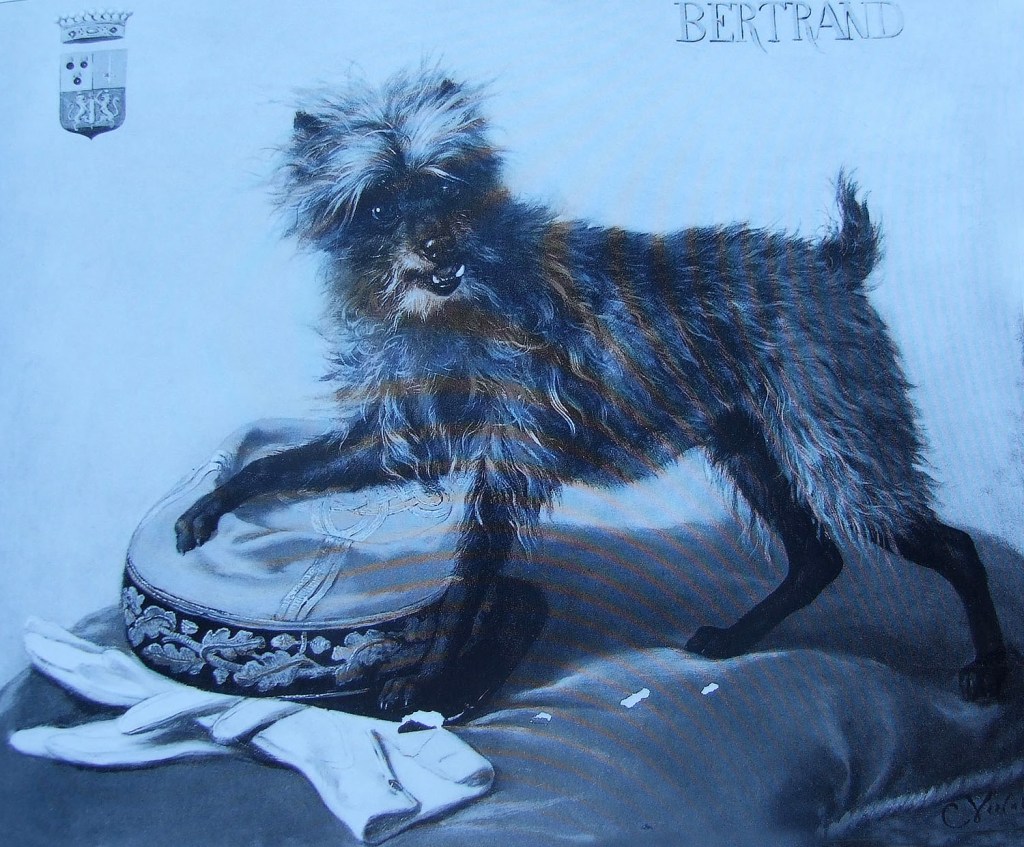
(Old rough-coated dwarf Pinscher)
Under this momenclature, very appropriate, we understand old German form Zwerg (dwarf) of the Rattler (Ratter) with a rough coat as earlier described, but the head of our little Affenpinscher* is smaller. The upper part is rather arched and the corresponding muzzle very short. The eyes are larger and the lower part of the head more prominent. For these reasons the whole head is simian.
The coat is softer than the Rattler, it lengthens near the eyes and forms a crest, which gives it an owlish or monkey look in the face. Weight not above 3½ kg, with a similar colour to the Rattler.
Sadly, this completely German breed has been totally neglected in last years, with the result that the same breed was to be found in Belgium. Thus the Belgian Affenpinscher became a special breed, the “Griffon Bruxellois” (cf. B. Belgian Affenpinscher).
What is worse, the Affenpinscher is also confused with the new Zwergrattler (Dwarf Ratter) in the Official German Registry and is considered as inferior variety, never a purebred! (Bergl. b, the rough-haired Dwarf Pinscher or Dwarf Ratter.) It would be wise to think of forming a club for the preservation of the Affenpinscher before it is completely supplanted by the breed perfected in Belgium.
* The Berf has maintained the traditional name “Affenpinscher” to be able to distinguish it from the more recent “Rough-coated Zwergpinscher.”
Taken from Geschichte und Beschreibung der Rassen Des Hundes von Ludwig Beckmann, 1895.
©translation P Hannan, 2022
The Affenpinscher
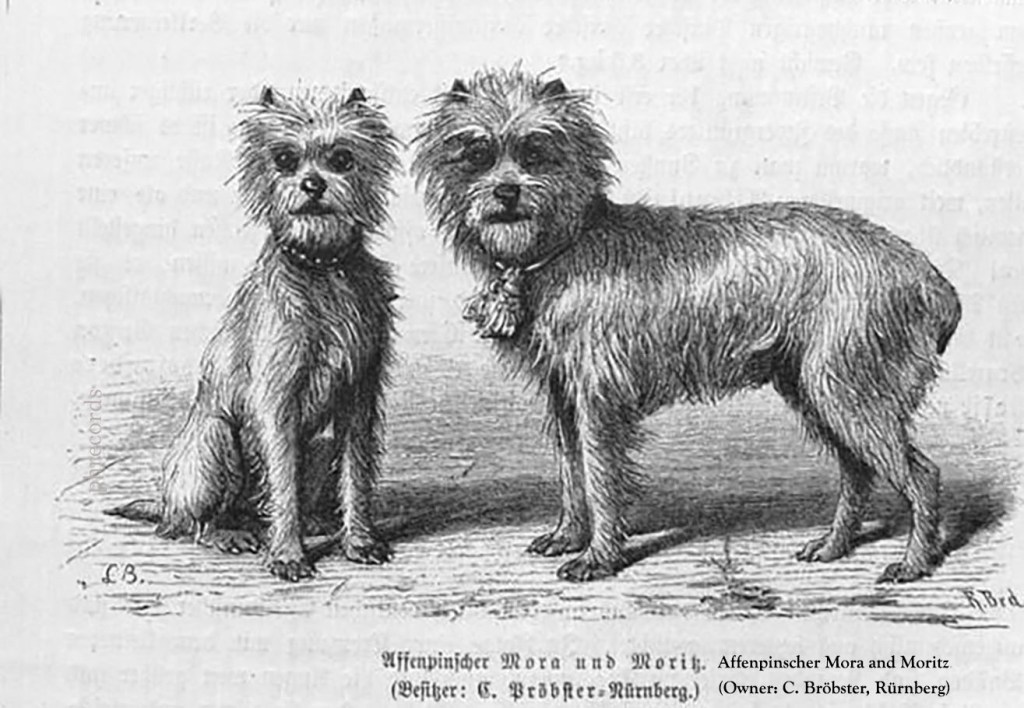
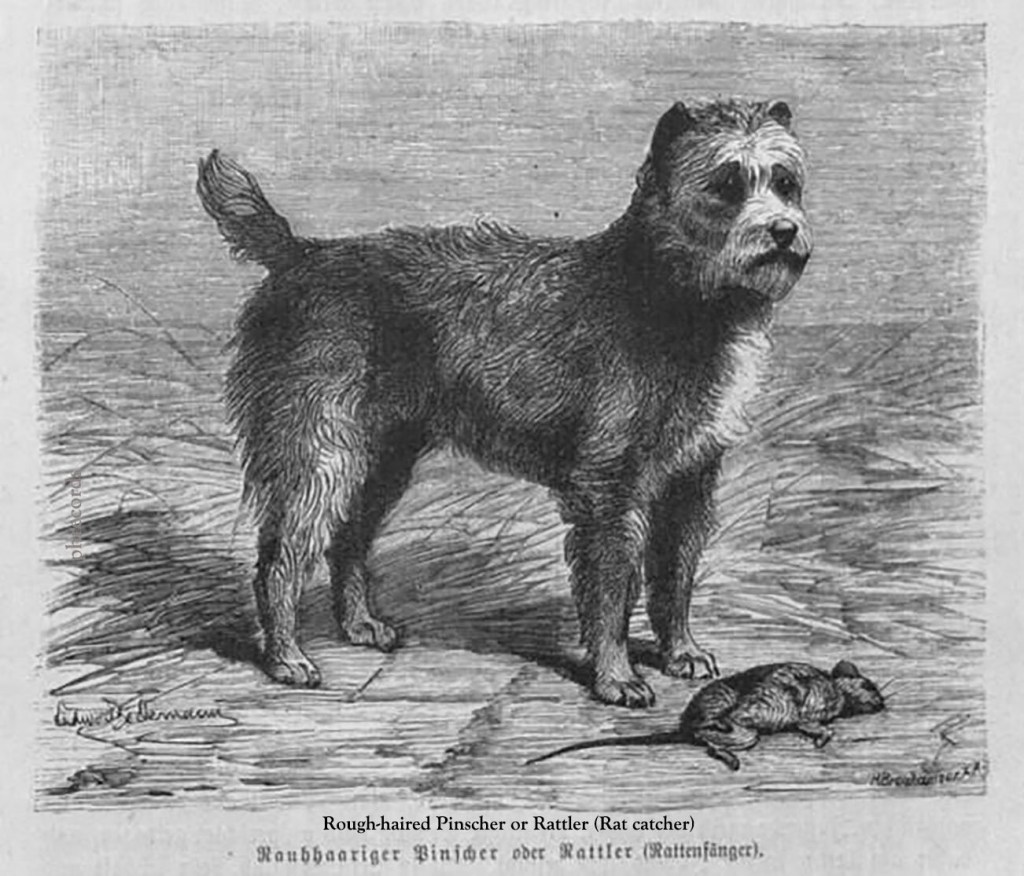
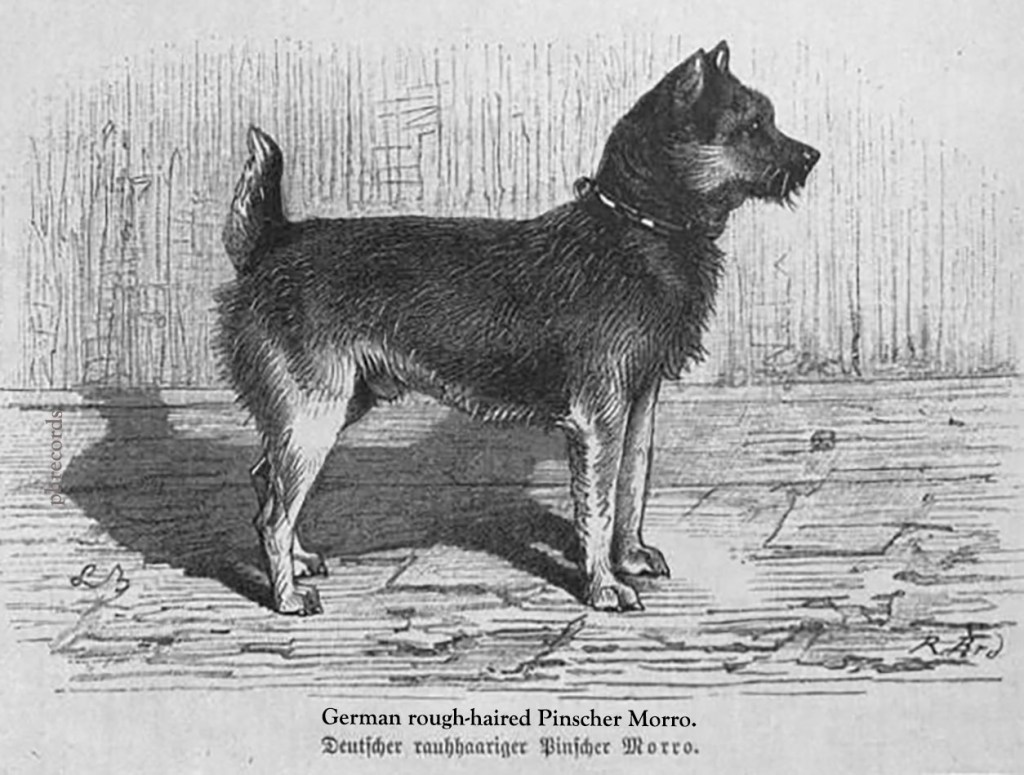
The Affenpinscher is quite an old breed, as can be seen in some images. The short muzzle and matted hair details, together with “monkey eyes” that make for a monkey face could have origins within the breed or as a result of crosses with other breeds. In old Germany the pug was readily available.
Krihler (1892) believes that the Affenpinscher is closely related or possibly identical with the rough haired German miniature Pinscher. It has a round skull, short muzzle and round large bulging eyes surrounded by a mat of longer hair can give an owlish or monkey-like impression. The coat, especially around the face, is softer than the rougher haired Pinscher.
Beckmann (1895) writes, “By the name Affenpinscher we understand the old dwarf variety of the large Wire-haired Rattler (German ratter dog), but the skull is shorter, the top part is rounded, the muzzle very short, bigger eyes, the lower jaw slightly protuberant, making for a head that is rather like that of a monkey. Coat a little smoother than that of the Rattler, fanning out in a crown around the eyes, giving rise to a simian facial aspect.
Weight no more than 3.5 kg. Colour similar to the Rattler.”
Bylandt (Hunderassen, 2nd edition, 1897) gives us the following description,
General aspect: A small dog, compact, brave and lively, whose coat type suggests great resistance.
Head: Large and round, abundant matted hair with well furnished brows.
Skull: Domed and well covered with long, irregular hair. Small, short muzzle in relation to the skull, covered by a thick beard. Strongly defined forehead. Lower jaw slightly protuberant, teeth not showing.
Eyes: Large, bulging, dark, spirited with a lively expression. Dark eyelids with noted bushy brows.
Nose : Always short, black surrounded with whiskers that reach the eyes forming a circle.
Ears: Cropped, short and very well covered, well separated and pricked.
Neck: Medium length and arched.
Chest: Neither too broad or narrow.
Shoulders: Strong.
Belly: Lightly tucked up.
Trunk: Compact and soundly constructed.
Legs: Fairly long and straight. Relatively strong bones. Abundant coat.
Feet: Small and round. Arches toes with much hair between the pads.
Tail: Cropped to two-thirds, raised at a slant with shorter coat than the rest of the body.
Coat: Abundant, rough, dry, without shine and not too short.
Colour: Black-grey, blue-grey, red-yellow, yellow, black-yellow, light grey, brown, these tones often with a black mask.
Size: Less than 25cm.
Weight: Less than 4kg.
Defects: Wide chest, arched back, long muzzle, visible teeth, light eyes or nose, coat either smooth or long, flat skull, visible white markings.
In the opinion of some breed experts, the above descriptions are partly too short, in some points not clear enough, partly of poor quality and meaningless.
Hence the not unjustified attempt of the German Cynological Association to rewrite a new version.
The following Project is based on a suggestion of the Austrian Cynological Association:
General aspect: Understood as miniature, in general smaller than the rough-haired miniature Pinscher, but not so delicate, ratger stronger built. The form and coat of the head give a simian expression. Squarely built. Never should the back limbs be pushed under the body as the result of an excessive angulation of the thigh and an excessive angulation of the knee. Very lively, fearless, sharp-witted, a little devilish, full of fire and ice, alert and clever.
Head: Rounded skull, thus wide between the ears. Arched forehead, deep stop, saddled nose, short muzzle, short nasal cartilage. Thus the nose is not turn up (flat nose), the muzzle is a shortened cone, which is to say not so wide and deep as a Pug or toy Spaniel.
Large eyes and filling the space between the eyelids, almost round. Iris dark brown. Slightly bulging. The apex of the cornea opposite the edge of the lids.
Ears: Cropped to a point, if uncropped then small and pricked.
The lower jaw slightly turned upwards with no space between the incisors. The teeth may be visible, the pinch bite is acceptable, a scissor bite is undesirable.
Neck: Medium length, straight, slightly curved behind the head, high insertion.
Body: Sturdy, pronounced withers, straight back, lightly arched flanks and forechest. Deep, wide chest, ribs well sprung and broad. Arched front. The width of the chest corresponds to distance between the front legs. Belly moderately tucked up and sloping shoulders.
Tail: Cropped short, held high.
Legs: Straight front legs, articulations moderate angled. Small feet with arched toes without separations. Bones not weak, well muscled.
Coat: Quite harsh on the body, of medium length. Smoother on the head and legs, sometimes silky. Abundant undercoat, dense and curly. Smoother around the eyes, ears and beard. Tufts between the toes.
Colour: Black is the most common and most valued. Also black with yellow markings, yellow, reddish yellow, red (brown-red, darker or lighter) various tones of grey. Very light colours, white and white markings are defects.
Size: 26 cm at the withers, but the smaller the better even so the character and form must be respected.
Weight: Under 4kg.
Breed characteristics
General appearance. The general appearance is the most important thing of the breed, details are subordinate to it, importance anatomical details hardly count.
It is small but in no way delicate, rather stocky. Funny but of serious aspect, at times relaxed and quiet, at times passionate, has a bad temper, fearless and stubbornly rejects anyone he sees as an opponent. Devilish, fire and ice, but with a touching attachment to owner and home.
The head is more spherical than elongated, not too heavy, rounded with a prominent forehead, the muzzle is short and a little pointed, the eyes round and full, brilliant black in colour, the nose is black, the ears are implanted high and tucked, the teeth close well, but with a shortened upper jaw, a slight prognathism cannot be completely avoided and is not that important. Visible teeth is a defect.
The neck is short, without wrinkles and straight up.
Body: Back quite straight, as long as it is high at the withers, chest slightly flattened. Belly moderately tucked up.
The limbs: forequarters as straight as possible and close to the shoulders; hindquarters with little angulation in the hocks, rather straight under the croup. The whole construction gives a simple and uncontrived impression.
Tail: high implantation, cropped when young, carried high.
The coat essentially determines the overall impression of the dog. At times it is short and dense on the body, sometimes fibrous and loose, always harsh or roughish, slightly longer on the legs and forming the most elegant furnishing on the head. The bushy or bearded eyebrows form a crown around the eyes, which together with the magnificent beard and moustache gives the face that simian expression from which the dog obtains its name.
Colour: Black is the best colour because it is perfectly suited to the inner nature of the dog, his dark, burning eyes and his quick temperament. But there are also black and tan, yellow, reddish yellow, red, grey and all possible tones, also mixed colours of all kinds, which are permitted and cause only a difference of degree in their purity. Very light and bright colours, white and white markings are defective.
Size: As a general rule the height of 26 cm at withers should not be exceeded. The smaller the Affenpinscher, the more valued, always respecting the general features. However these permit a high degree of reduction, also anatomical given the permissiveness in the breeding.
Die Rassen des Hundes. Schnauzer, Pinscher, Terrier. DDr. Emil Hauck, Wien, 1964
©translation P Hannan, 2022
Affenpinscher Yearbook 2012






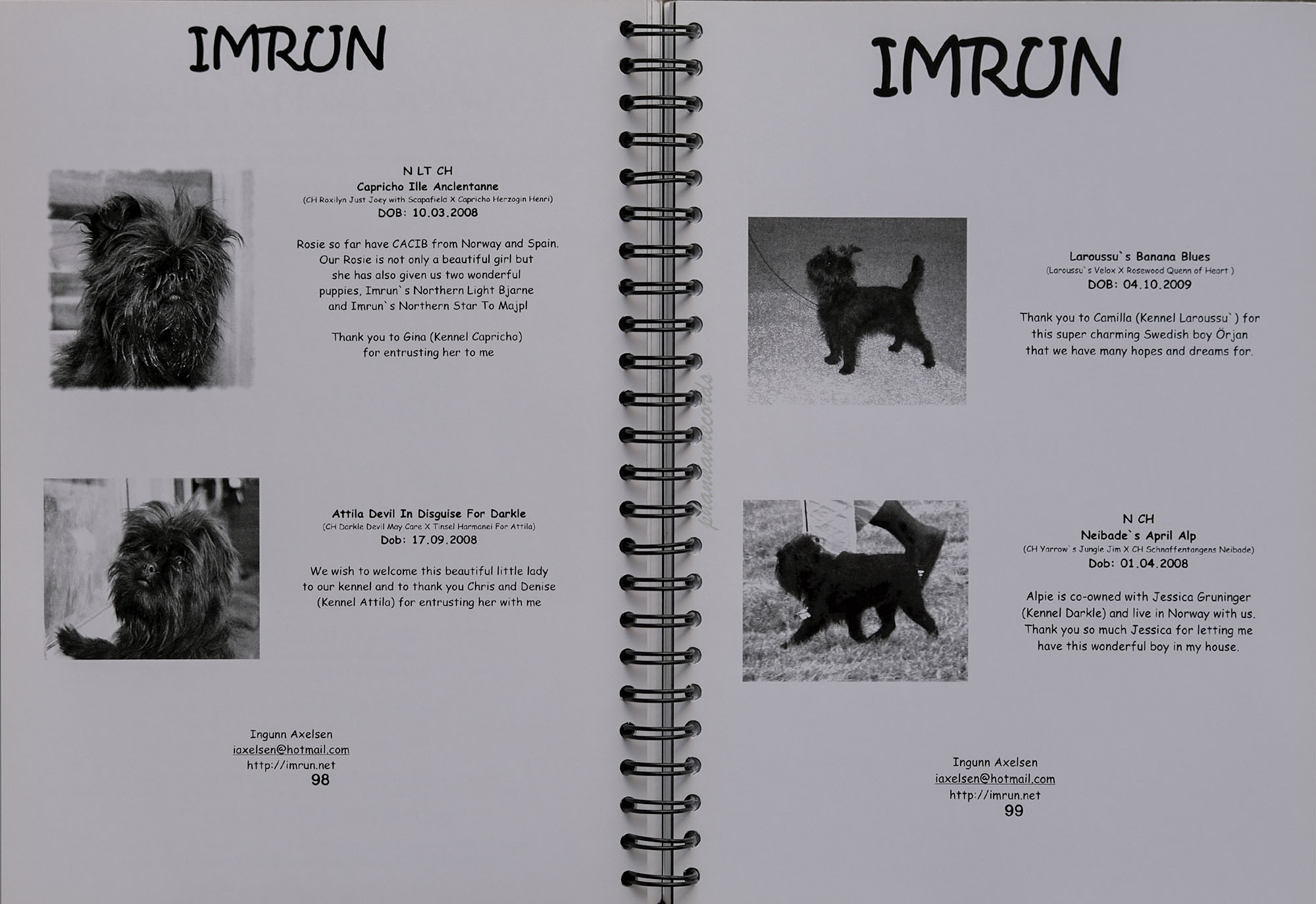

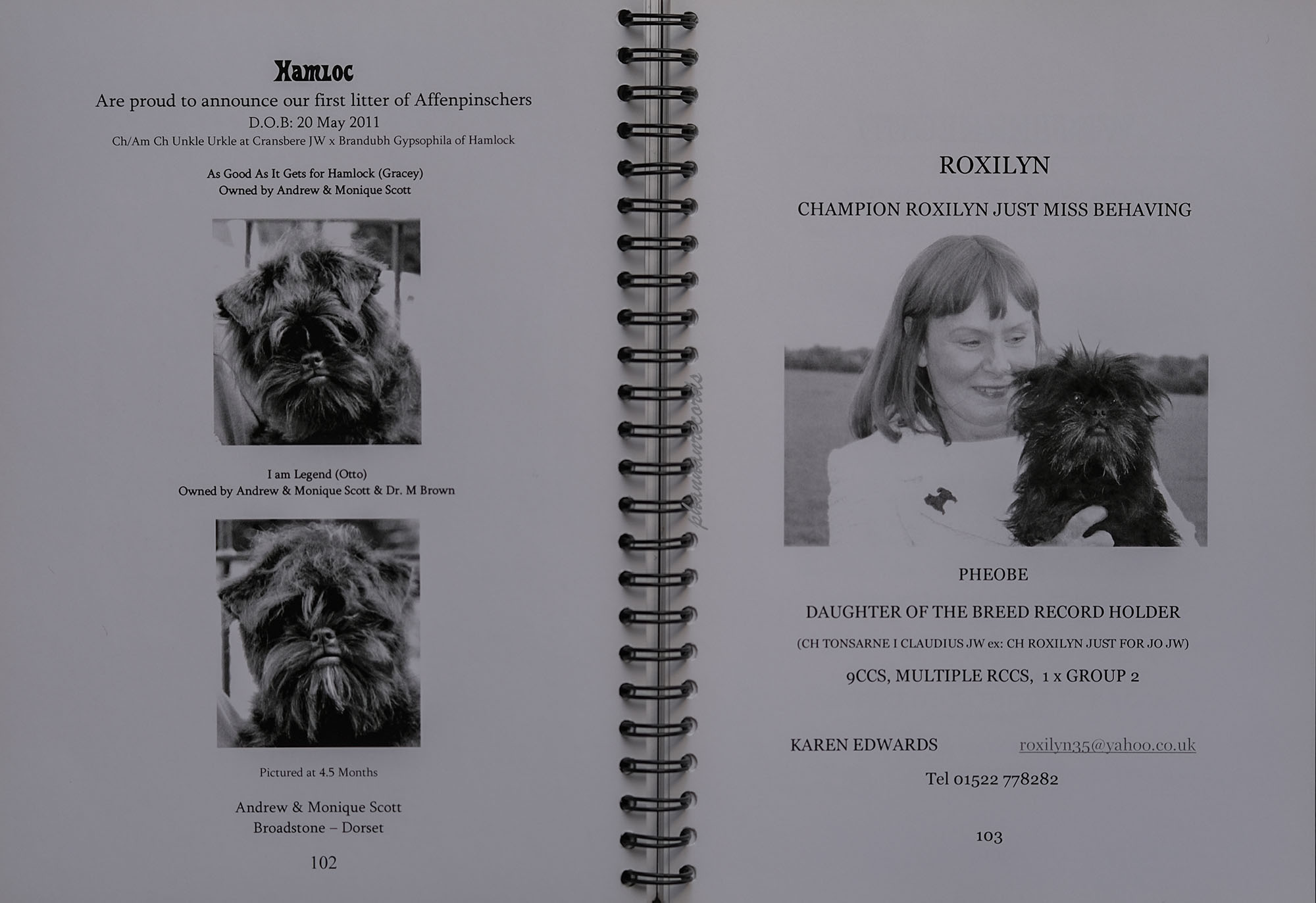
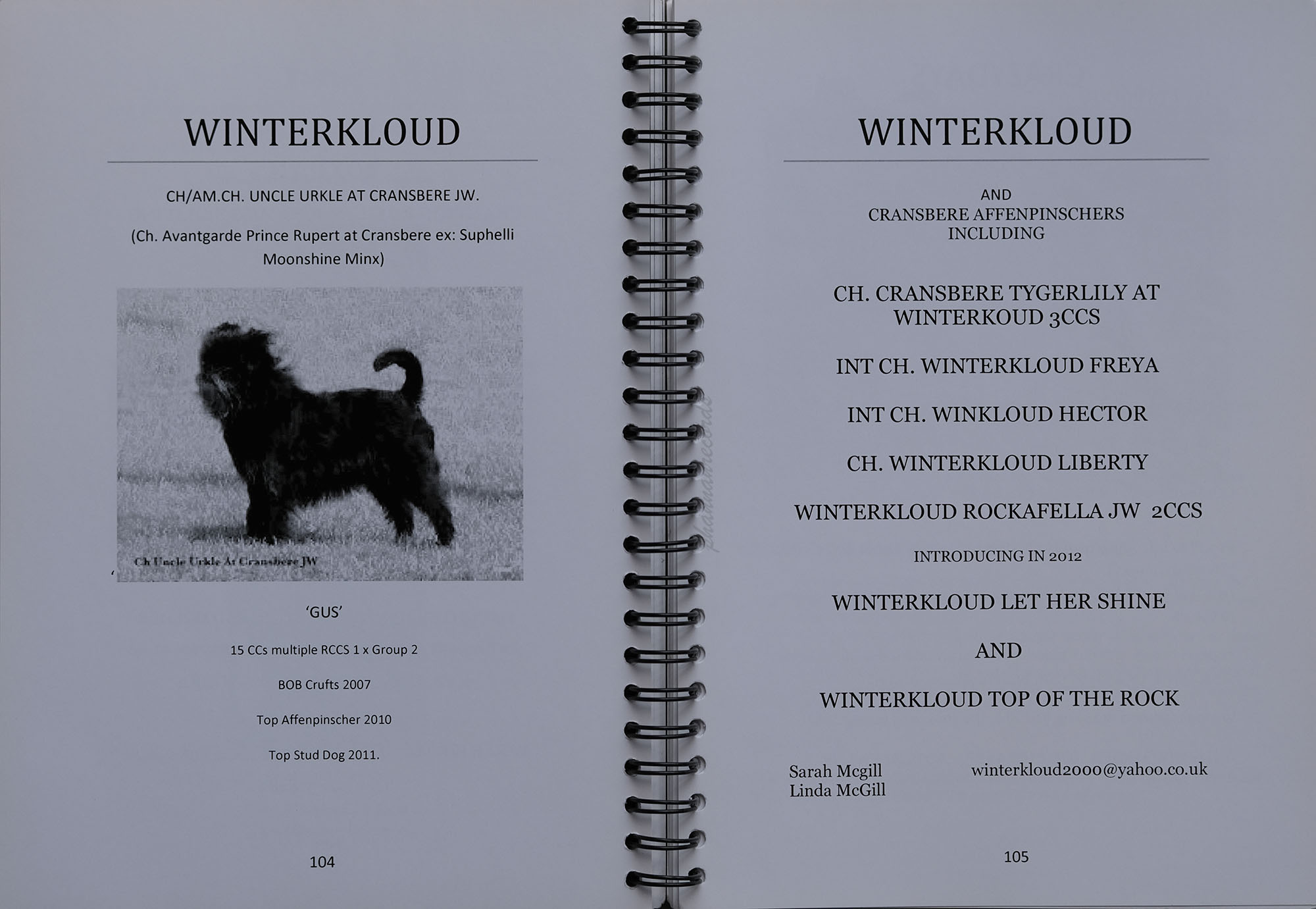
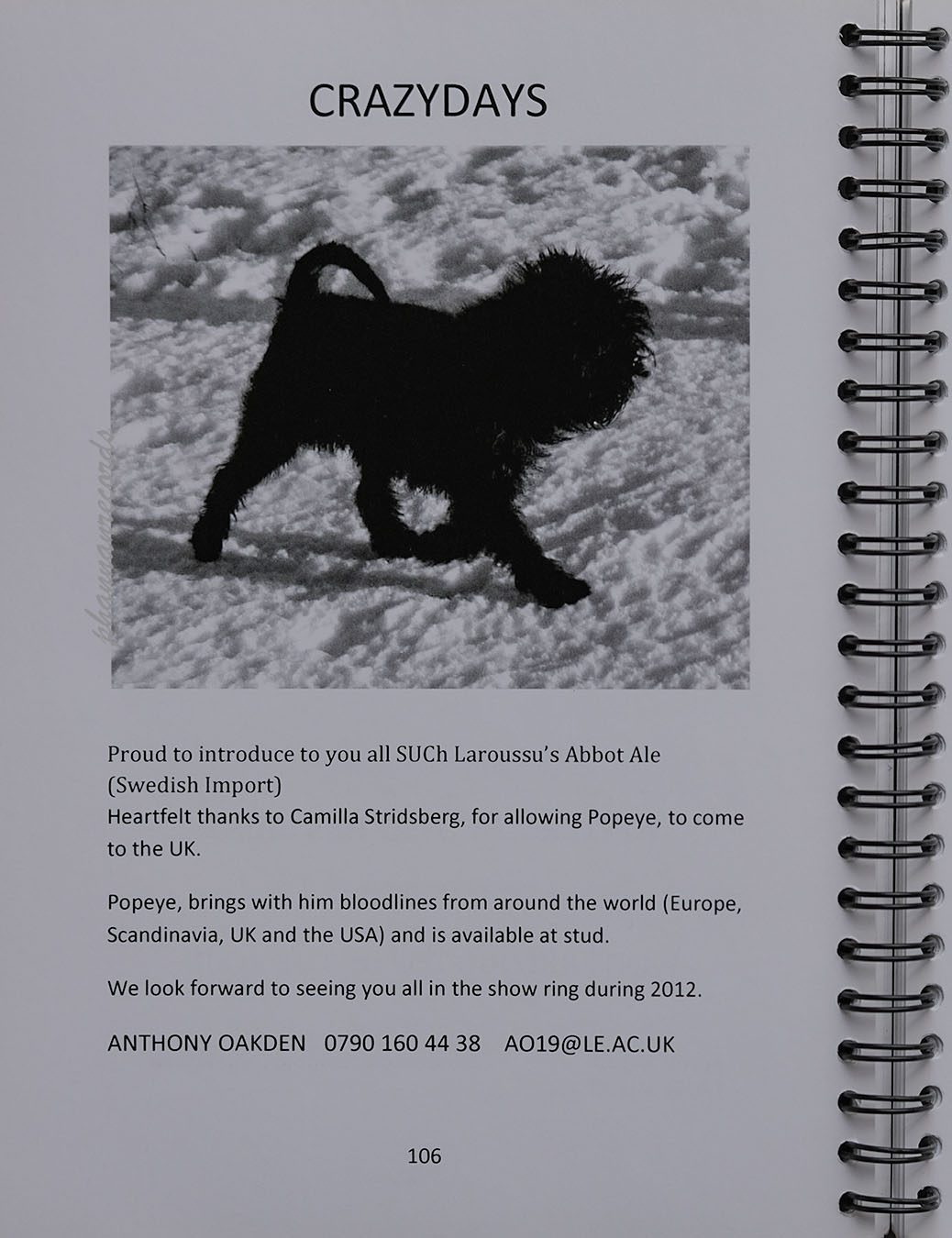
French Bulldog history
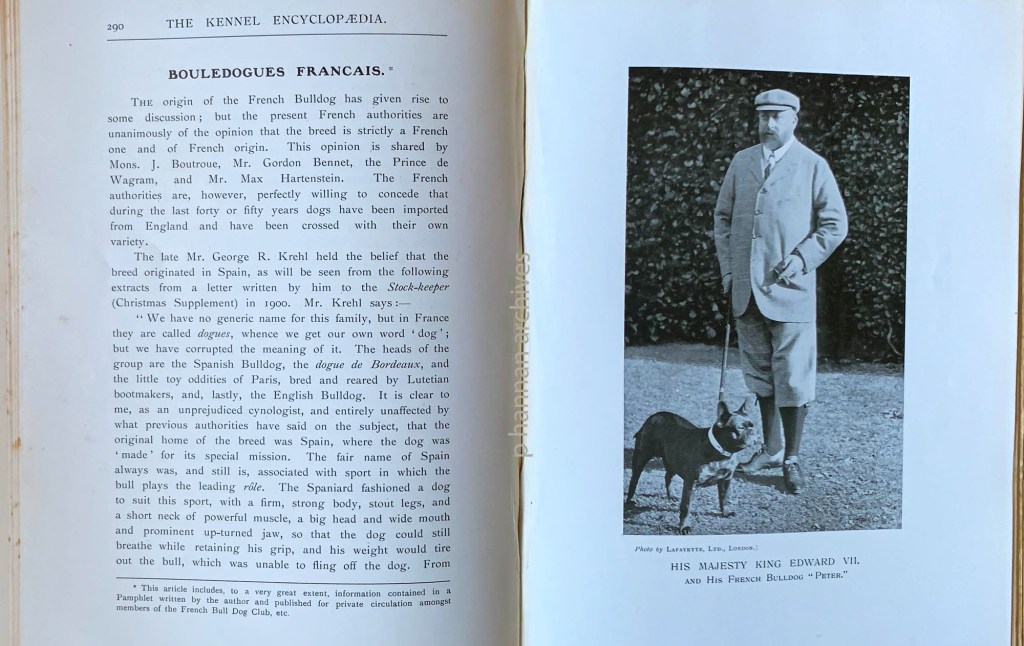


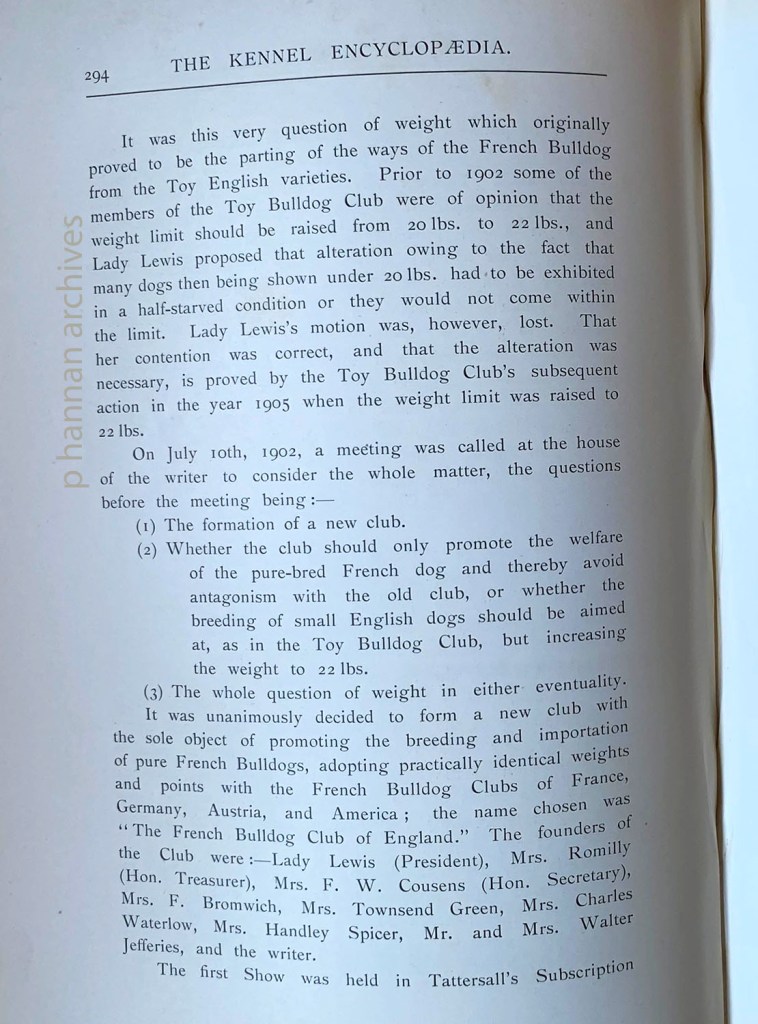
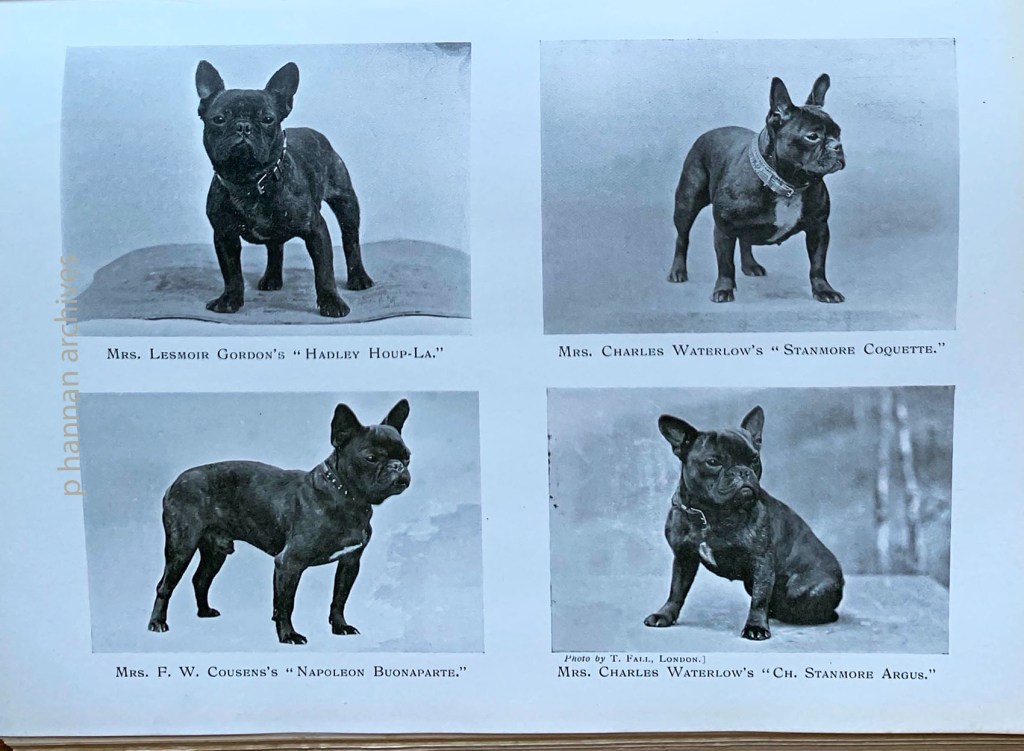
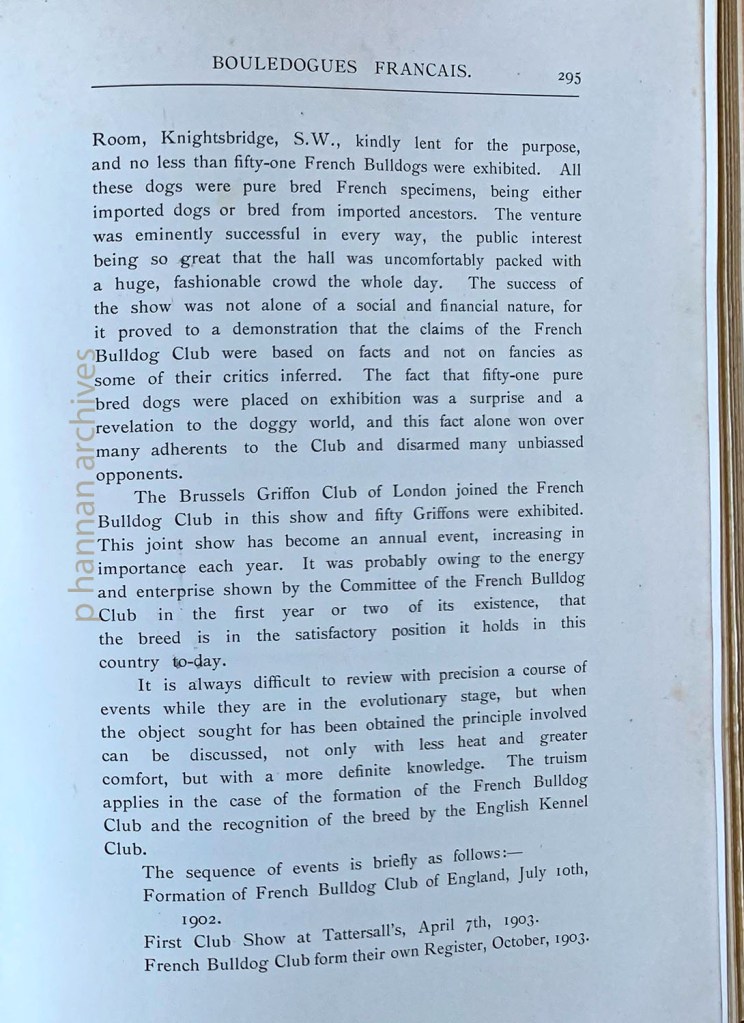

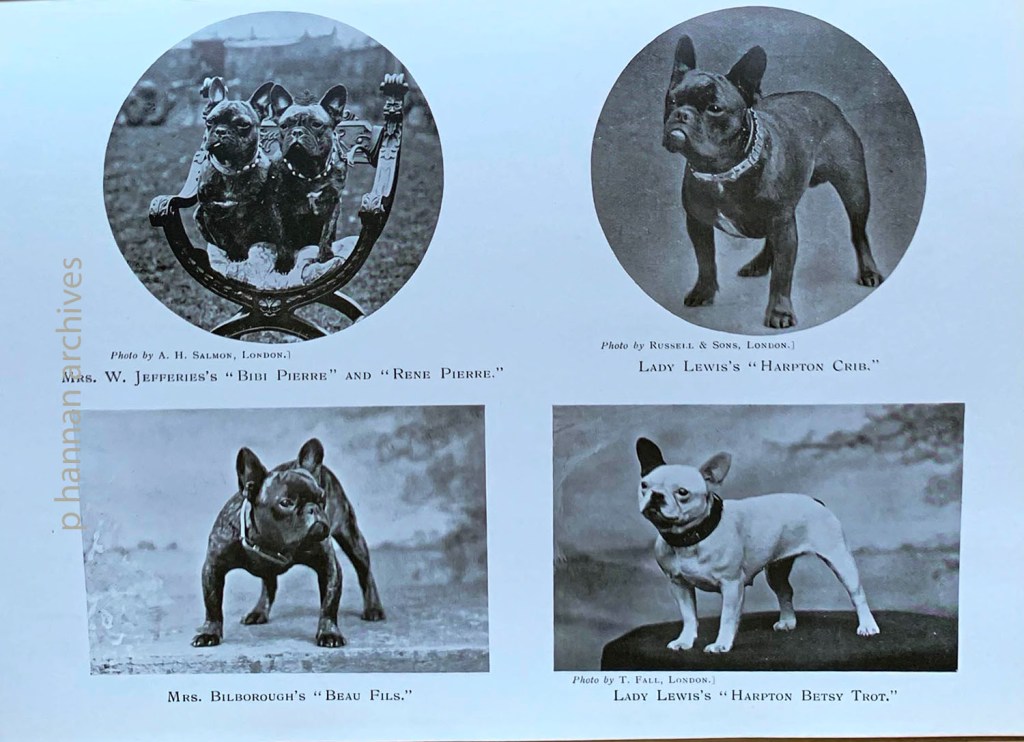
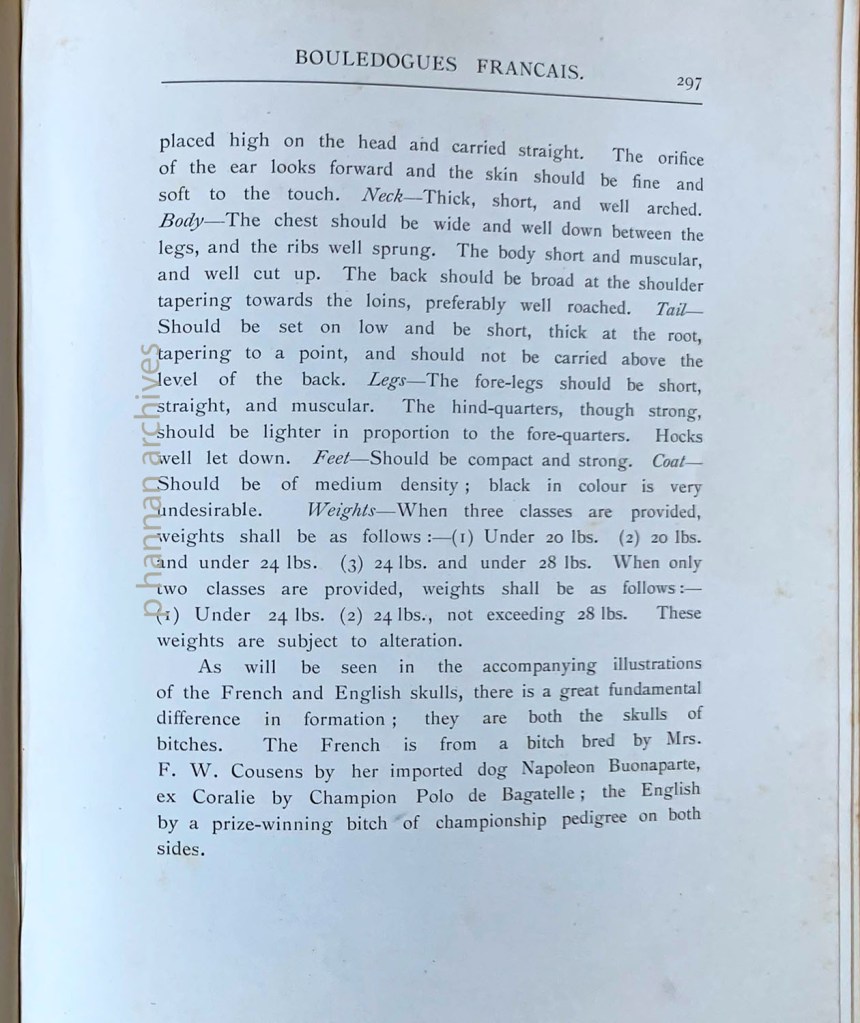
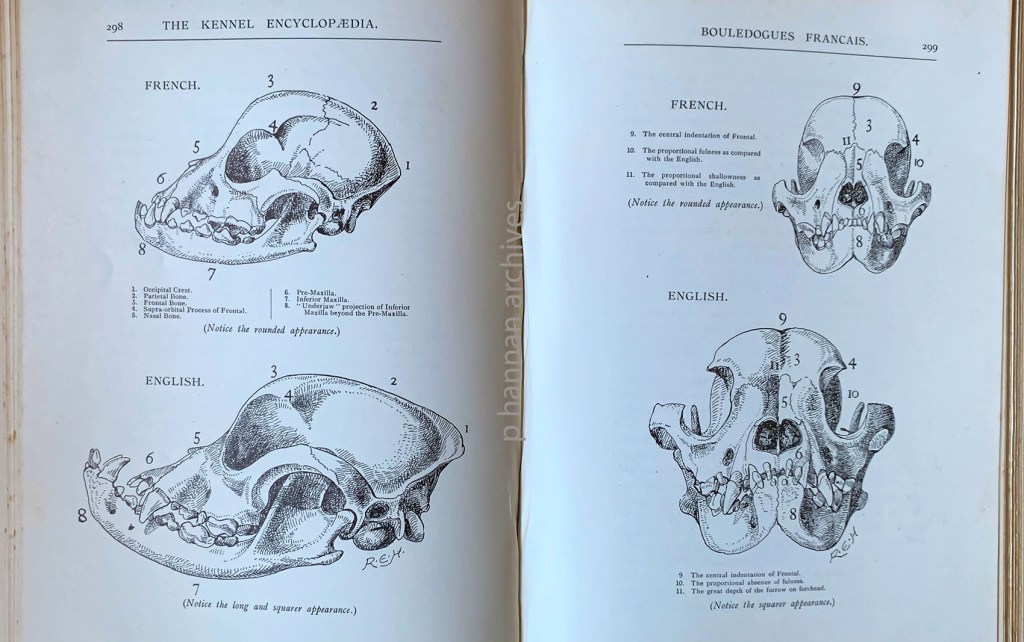
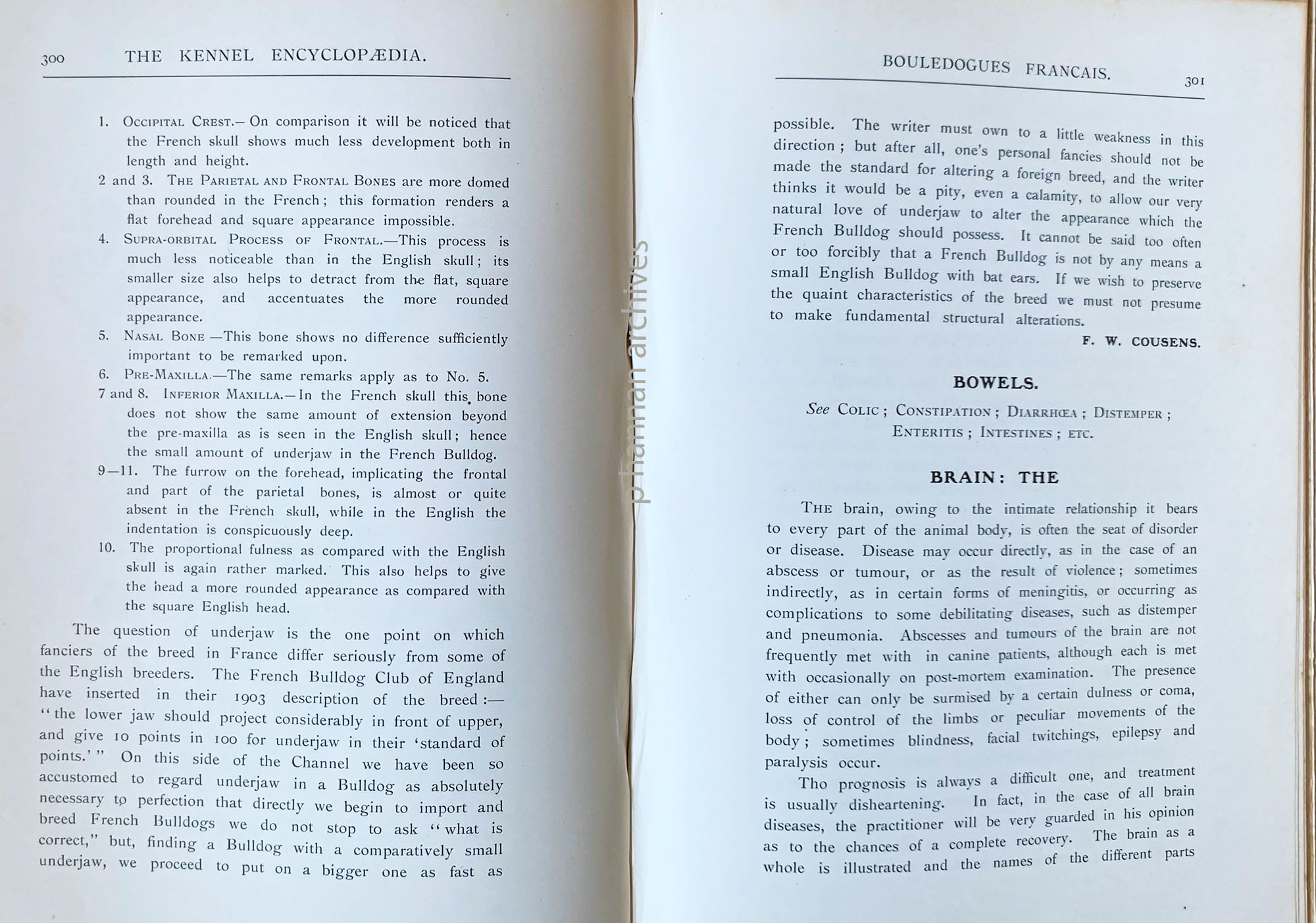
A French Bulldog history by F.W. Cousens. 1907
Taken from The Kennel Encyclopeadia.
Under The General Editorship of J. Sidney Turner (Charmain of the Committee of the Kennel Club) Assisted by Vale Nicolas.
The Encyclopaedic Press, 22 Bank Street, Sheffield.
America: “Field and Fancy,” 14, Church Street, NY.
India: The “Indian Kennel Gazette,” Jullundur.
London: Sir W.C. Leng & Co. (Sheffield Telegraph), Ltd., 180&181. Fleet Street, E.C.
 Telling Stories